China’s economy big enough to absorb Iran war shocks, says Justin Lin
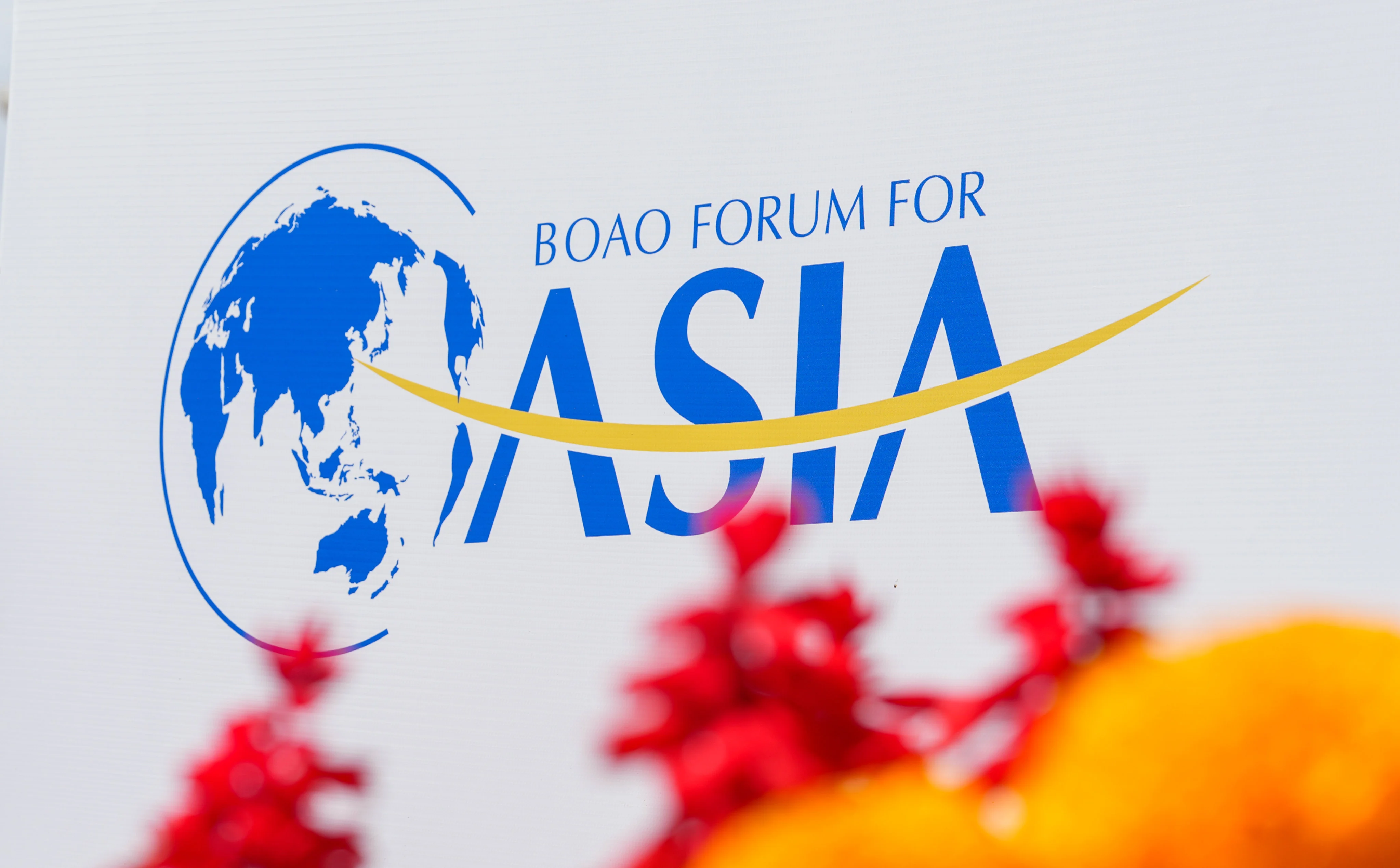
he logo of the Boao Forum for Asia in Boao, Hainan province, this week.
Photo: Xinhua China has sufficient capacity to absorb external shocks from the Iran war and meet its annual economic growth target, a prominent economist said, while adding it was also preparing for the possibility that Washington might renege on trade deals.
Justin Lin Yifu, dean of the Institute of New Structural Economics at Peking University and a former chief economist at the World Bank, said on Thursday that no country could be spared from the economic impacts of the conflict in the Middle East, which has sent global oil prices soaring. “In the worst scenario, it may send the whole global economy into a recession, like the two oil crises in the 1970s,” Lin said on the sidelines of the Boao Forum for Asia in southern China’s Hainan province.
But the magnitude of the negative impact would differ for countries of different sizes, he said.
China had “enough space to offset, to moderate, the shock from outside and to maintain our development agenda”, Lin said, referring to this year’s economic growth target of 4.5 to 5 per cent, “as long as we can do things well domestically”.
The range-based growth target could provide flexibility in responding to external uncertainties, Lin said. “If we do well, we can grow even more,” he said. “But it depends not only on us, but also on the global situation.” As the world’s largest trader, China was well positioned to achieve stronger growth amid a less turbulent global environment, Lin said.
After US President Donald Trump announced that he had rescheduled his China visit to May 14-15, after delaying it from next week due to the Iran war, Lin said discussions between the two countries’ presidents, in both face-to-face meetings and telephone conversations, were crucial for reaching consensus between Beijing and Washington.
But China remained soberly aware that the United States might not subsequently implement any agreements reached, he added. “Very often, the agreement will be achieved, but may not be implemented by the other side,” he said. “We will be happy to reach an agreement again, but we will be prepared in case the agreement is not implemented by the other side. “But I would hope, in a civilised world, that an agreement is an agreement, and that it would be implemented.”
原文链接: 南华早报