
Top Singaporean materials scientist Seeram Ramakrishna joins China’s Tsinghua University
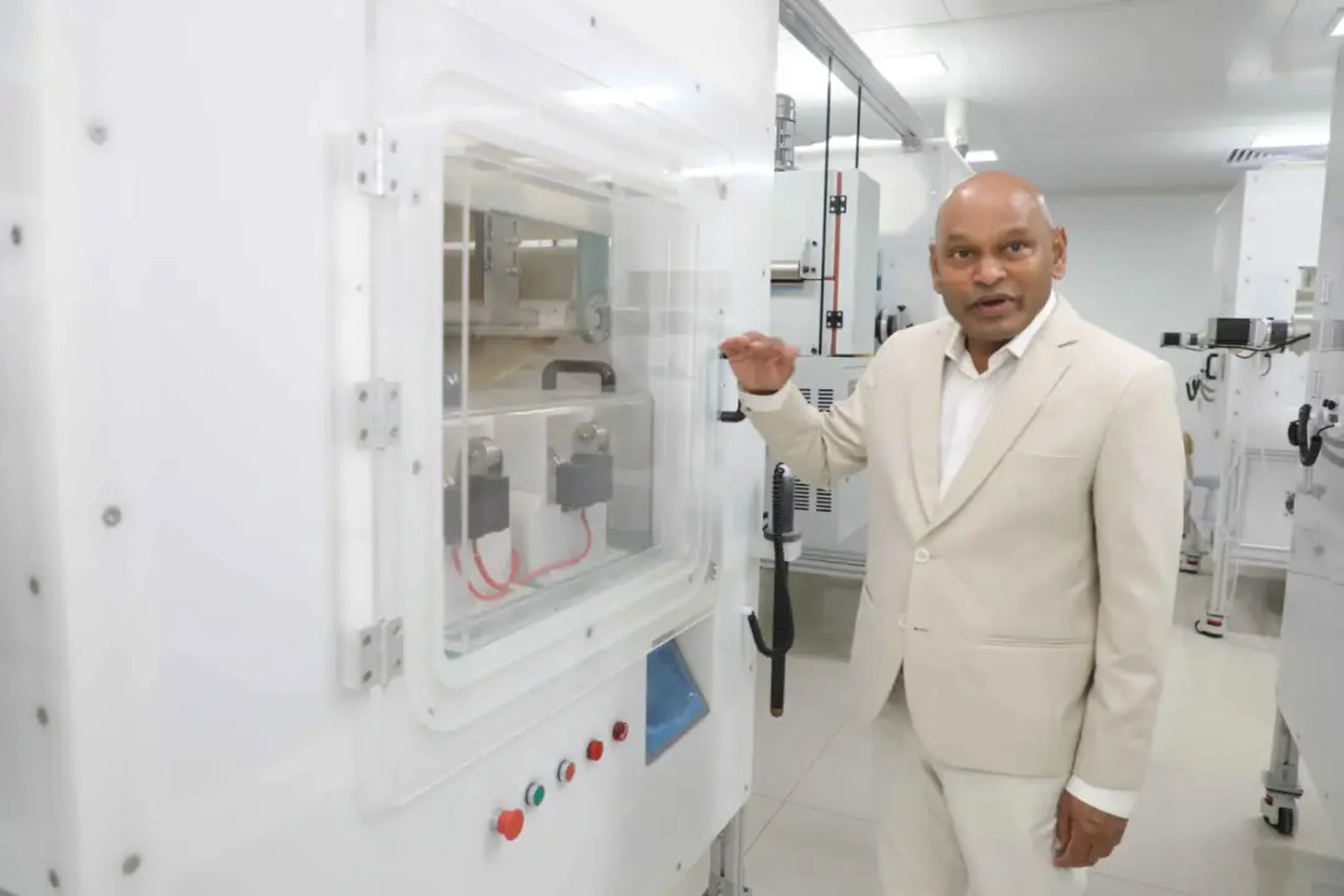
Seeram Ramakrishna’s research has focused on areas such as medical technology and wearable devices.
Photo: Handout Seeram Ramakrishna, a leading researcher at the National University of Singapore and the most cited scientist from the city state, has joined one of China’s leading universities full time.
He joined the department of mechanical engineering at Tsinghua University in September, but the university only announced the appointment this week.
The Singaporean, who was described by MIT Technology Review China as the “father of electrospinning”, has been appointed as a Xinghua distinguished chair professor – the university’s highest professorial title – and director of its iWearables Centre.
Tsinghua president Li Luming welcomed Ramakrishna to the university, describing him as a world leader in the fields of nanoscience and nanotechnology.
He added that he hoped his academic influence and leadership would help the university to produce more high-level results.
Ramakrishna said he was well aware of Tsinghua’s academic and cultural heritage and he hoped to use his experience to help conduct innovative research.
Born in India, Ramakrishna earned his master’s degree from the Madras Institute of Technology in 1988 and his doctorate from the University of Cambridge in 1992.
He began teaching at the National University of Singapore in 1996 and remained there for nearly 30 years, serving in various roles, including as vice-president for research strategy between 2008 and 2012 and most recently as a professor of materials engineering in the mechanical engineering department.
Ramakrishna is best known for his work on electrospinning, a method for making nanofibres by applying a high voltage to a polymer solution or molten polymer that produces long, thin fibres.
Over the past 25 years, much of his research has focused on submicron-scale nanofibres and the development of new electrospinning technology.
Most electrospinning machines are only used in controlled laboratory or industrial settings, such as air filtration manufacturing facilities.
But Ramakrishna and his team worked on handheld electrospinning machines using technology that miniaturised the power supply to ensure they could be used in emergency situations where there may be no external power source available.
His research also focused on ways to develop materials for medical research, including artificial organs and regenerative medicine.
Electrospinning was initially used to develop two-d
原文链接: 南华早报