
What ancient Chinese wisdom can offer a divided world – and the US
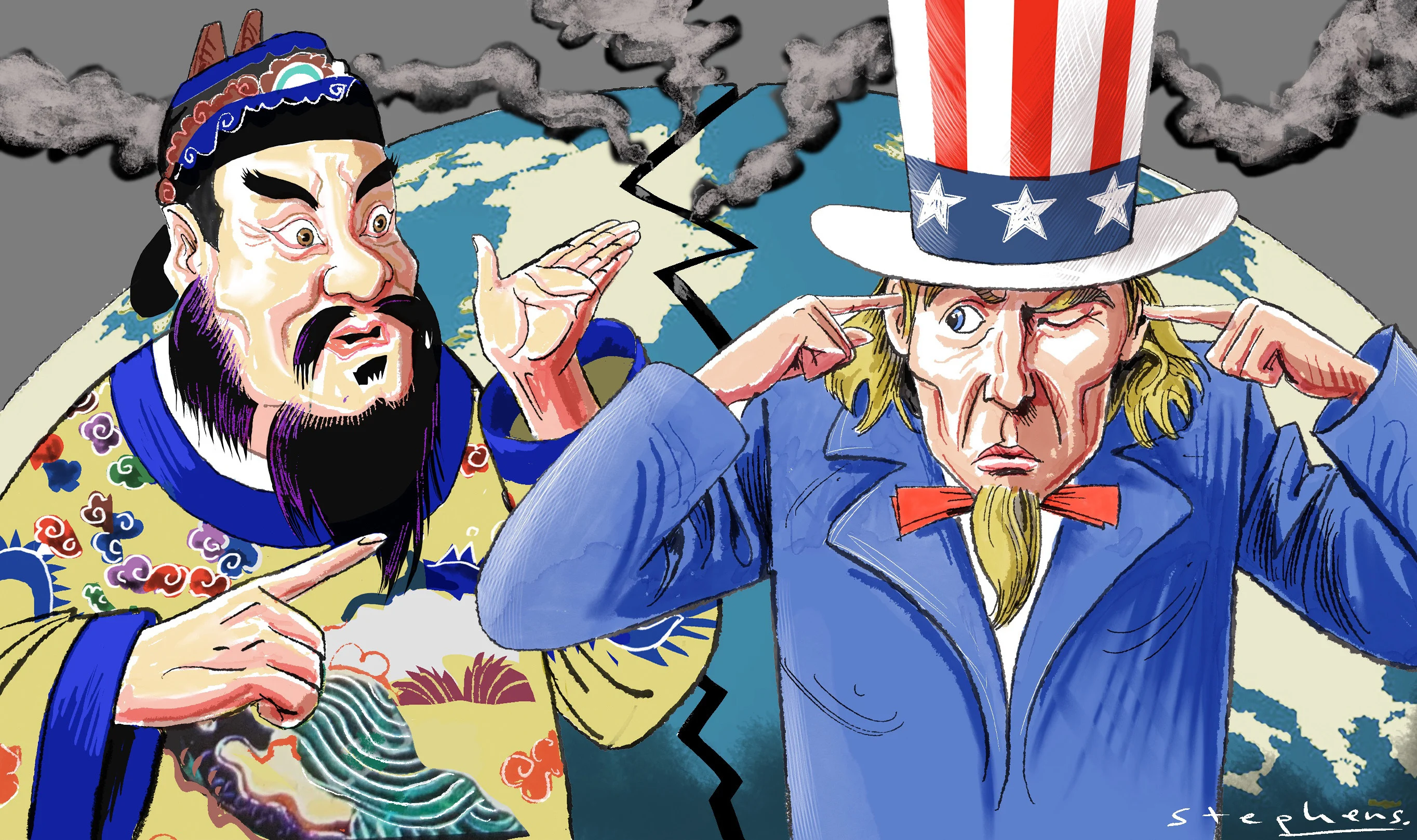
Illustration: Craig Stephens Amid uncertainty over the timing of a summit between Chinese President Xi Jinping and US President Donald Trump, the world is watching closely to see where the two largest economies are leading us.
At a time of cascading crises like wars, regional tensions and economic uncertainty, the relationship between Washington and Beijing has become one of the most important variables for global stability.
And yet, for all the analysis of military budgets, trade deficits and geopolitical competition, one critical dimension remains stubbornly underappreciated in American policy circles: the deep, historical wisdom that shapes China’s approach to the world.
It is no accident that Chinese leaders, from the head of state to the foreign minister, so often turn to classical poems, historical essays and age-old proverbs to explain the country’s stance and foreign policy.
These are not decorative phrases.
They are windows into a civilisation that measures time in millennia, not election cycles, and draws its lessons not from recent decades, but from thousands of years of rise and fall, unity and division, war and peace.
The most recent example came during China’s annual parliamentary “two sessions” meetings, when Foreign Minister Wang Yi quoted from On the Faults of the Qin Dynasty, written about 2,200 years ago. “When benevolence and justice are not practised, the position of strength shifts,” he said.
The essay dissects the collapse of the mighty Qin dynasty, which unified ancient China but collapsed rapidly precisely because it relied on brute force rather than benevolence and legitimacy.
Wang was not giving a lecture.
It was a historical warning: power without justice is self-defeating.
Strength without restraint carries the seeds of its own destruction.
I write this not to suggest that China is teaching the world lessons.
Chinese diplomats repeatedly emphasise that they do not seek to export their system or impose their values on others.
What they offer is something more modest and valuable: a perspective forged by a civilisation that has seen almost everything under the sun.
There is nothing new under the sun today.
Today’s headlines are yesterday’s stories retold.
The rise and fall of empires, dangers of overreach, cost of confrontation and durability of respect – these are not abstract theories to China.
They are lived experiences.
As a born-and-bred Chinese and a long observer of global affairs, I have come to apprecia
原文链接: 南华早报