The end of ‘win-lose’? China-backed mediation body makes pitch at Boao Forum
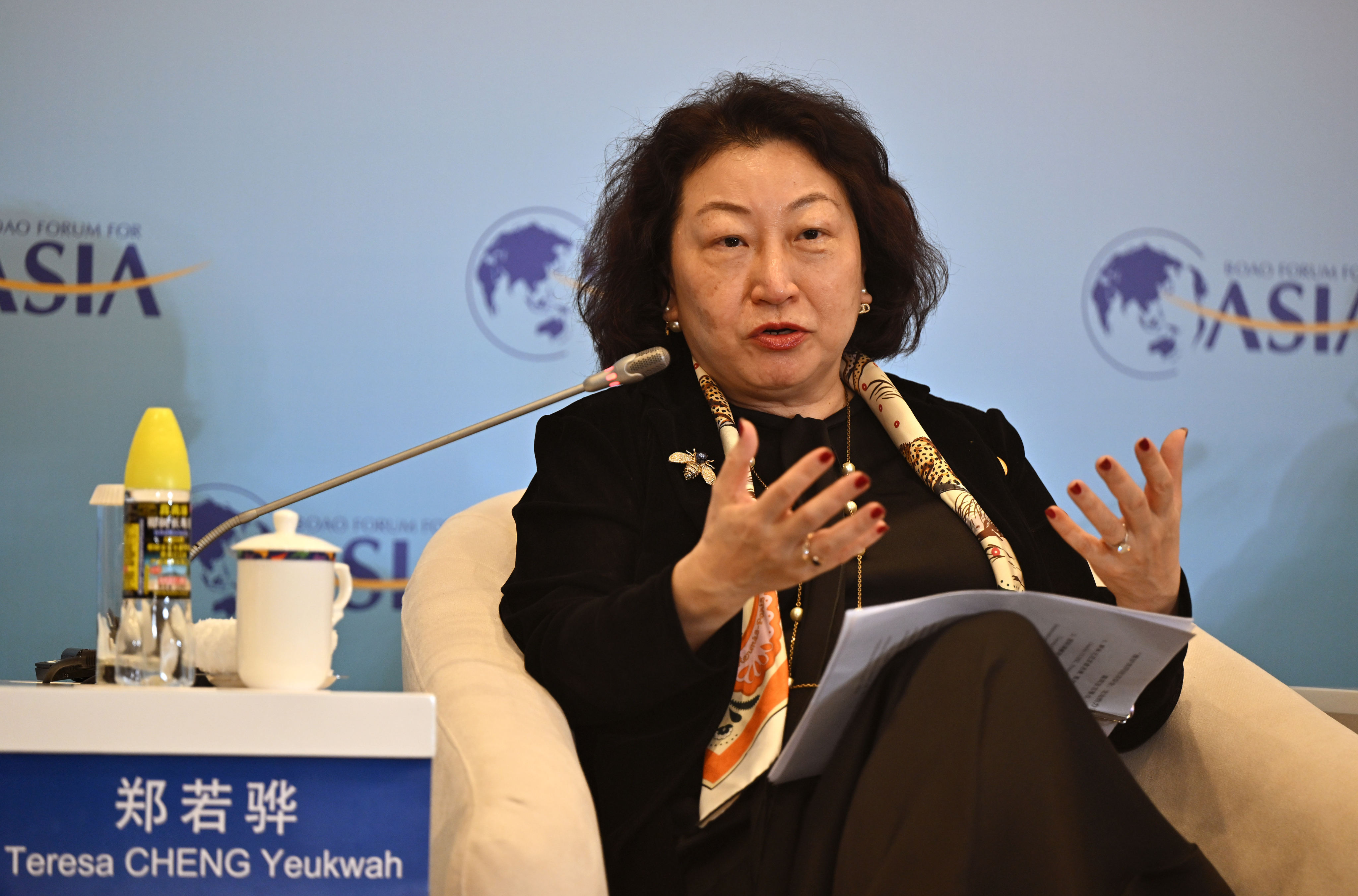
eresa Cheng, secretary general of the International Organisation for Mediation, takes part in a panel discussion on the sidelines of the Boao Forum for Asia in Hainan province on Thursday.
Photo: Xinhua The head of the recently launched International Organisation for Mediation (IOMed) has hailed its process as a flexible and pragmatic way to resolve commercial and state-level disputes involving long-term investment.
Speaking on the sidelines of the Boao Forum for Asia on Thursday, Teresa Cheng Yeuk-wah, IOMed’s secretary general, said mediation offered “the innate flexibility to create an infinite number of ways to resolve the dispute”, unlike arbitration and litigation that were marked by “a confrontational adversarial process” and “a win-lose situation”.
Cheng described mediation as “conciliatory” and “non-confrontational”, citing its voluntary nature and the fact that parties directly discuss a possible resolution. “There is only win-win because the parties are in control of the outcome,” she added. “So, both sides are happy when they settle.
And of course, there is no right or wrong because instead of that, they look at how to preserve the relationship, the long-term relationship.” Launched in 2025, the International Organisation for Mediation is headquartered in Hong Kong at the repurposed Wan Chai Police Station.
Photo: Jonathan Wong Cheng said mediation could be a pragmatic option for resolving commercial and investment disputes as well as state-to-state matters, especially projects involving long-term investment.
She advocated for mediation over traditional arbitration in long-term infrastructure and mining projects such as those under the Belt and Road Initiative, which would carry significant risk if bilateral ties were to break down mid-development and hurt the investor and host state.
A typical arbitration process could run for years and would be burdensome for states facing government transitions or electoral change, Cheng added. “We provide services for these three types of disputes with a view to ensure that matters are resolved in a way that is affordable and accessible.
This is a very important alternative that is viable for parties.” Beijing launched the IOMed last year, describing it as the world’s first intergovernmental legal body dedicated to mediation that would help “fill an institutional gap”.
In October, Cheng was appointed the organisation’s first secretary general.
An expert in international arbitration, she previously
原文链接: 南华早报