
Iran’s harder-to-hunt long-range missiles are taking greater toll
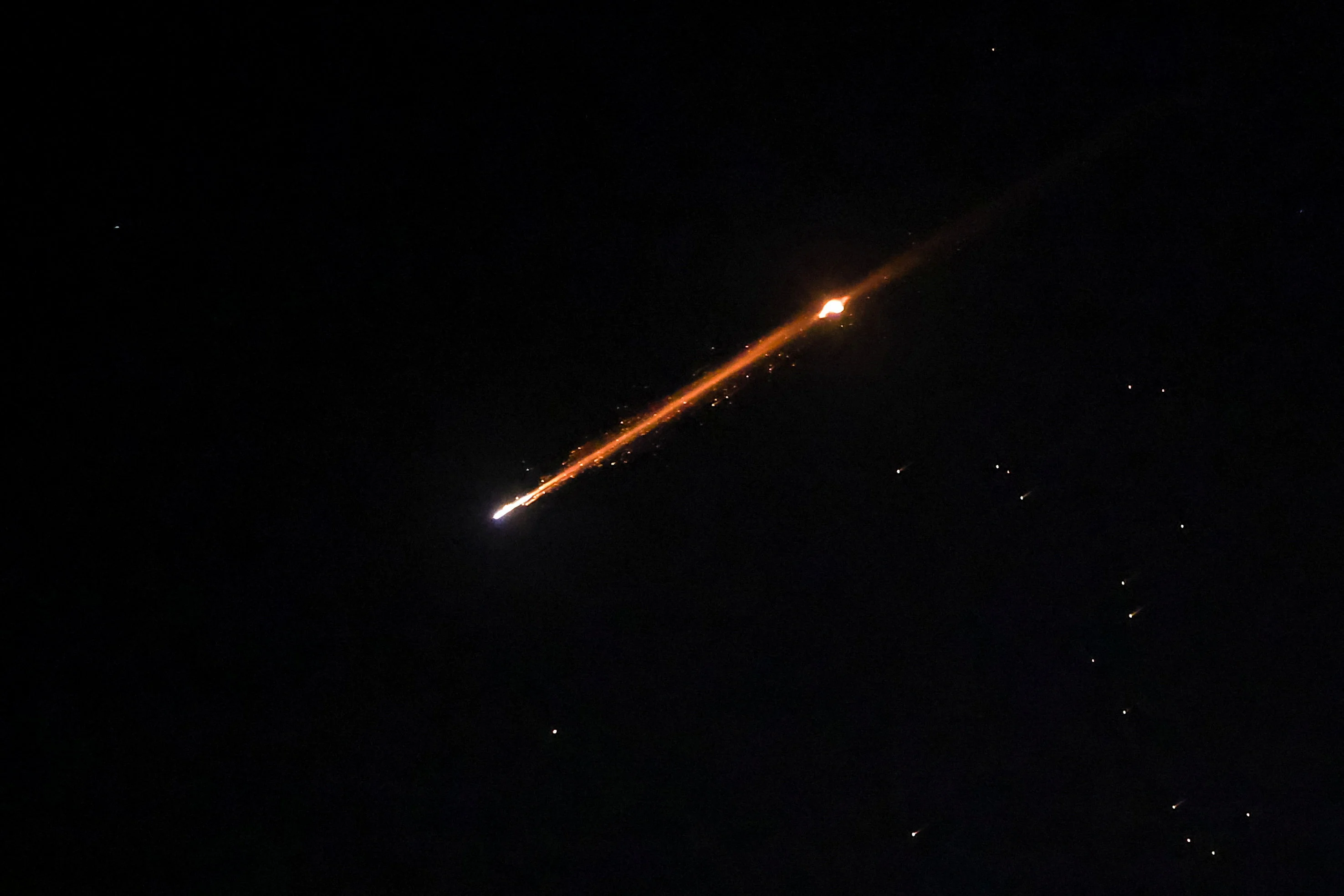
An Iranian missile with cluster munitions flies over Jerusalem on March 20.
Photo: Reuters Almost four weeks of unrelenting US and Israeli air strikes have severely weakened Tehran’s military, but what remains of its vast missile arsenal was being used more efficiently from hard-to-reach bases in eastern Iran.
In the latest example, strikes last weekend against Israel injured more than 100.
Targets included the city of Dimona, home to the country’s main nuclear research facility, and most likely involved Khorramshahr missiles, which have among the longest ranges and heaviest payloads in Iran’s arsenal, said Decker Eveleth, a research analyst at CNA Corp, a not-for-profit research and analysis organisation in Washington DC.
The US and Israel have estimated they have destroyed about two-thirds of Iran’s missile launchers, and US Defence Secretary Pete Hegseth has said the regime’s offensive capability has been reduced by 90 per cent.
Still, Tehran has continued to hit targets around the Gulf, with more than 1,200 ballistic missiles and at least 3,300 Shahed rudimentary cruise missiles so far.
Kelly Grieco, a senior fellow at the Stimson Centre, said analysis of open-source strike data such as videos, images and announcements seemed to show a sharp increase in how effective those attacks have been after about March 10 - with as many as a quarter of missiles getting through.
She cautioned that the picture could change as better information became available.
A vehicle in Kafr Qassem, Israel, flipping in the air and exploding after Iranian missile barrages were launched at Israel.
Photo: Reuters “A degraded Iran firing fewer and better aimed missiles and drones at carefully selected, fixed targets is getting more effective at imposing costs,” Grieco said. “In terms of how many are getting through, the trajectory is moving in the wrong direction.” An Israeli estimate put Iran’s arsenal at up to 2,500 ballistic missiles before the war started February 28.
US and Israeli strikes have taken aim at those stockpiles while also prioritising the destruction of launchers to prevent using whatever missiles remain.
The number of ballistic missiles fired at Gulf targets has stabilised at an average of about 21 a day over the last three days, said Becca Wasser, defence lead at Bloomberg Economics.
Last week, Iran attempted a strike on Diego Garcia, a joint UK-US base about 4,000km (2,500 miles) away in the Indian Ocean, using a prototype or modified ballistic mis
原文链接: 南华早报