
Greater Bay Area trails peers in basic research despite strong tech potential: Deloitte
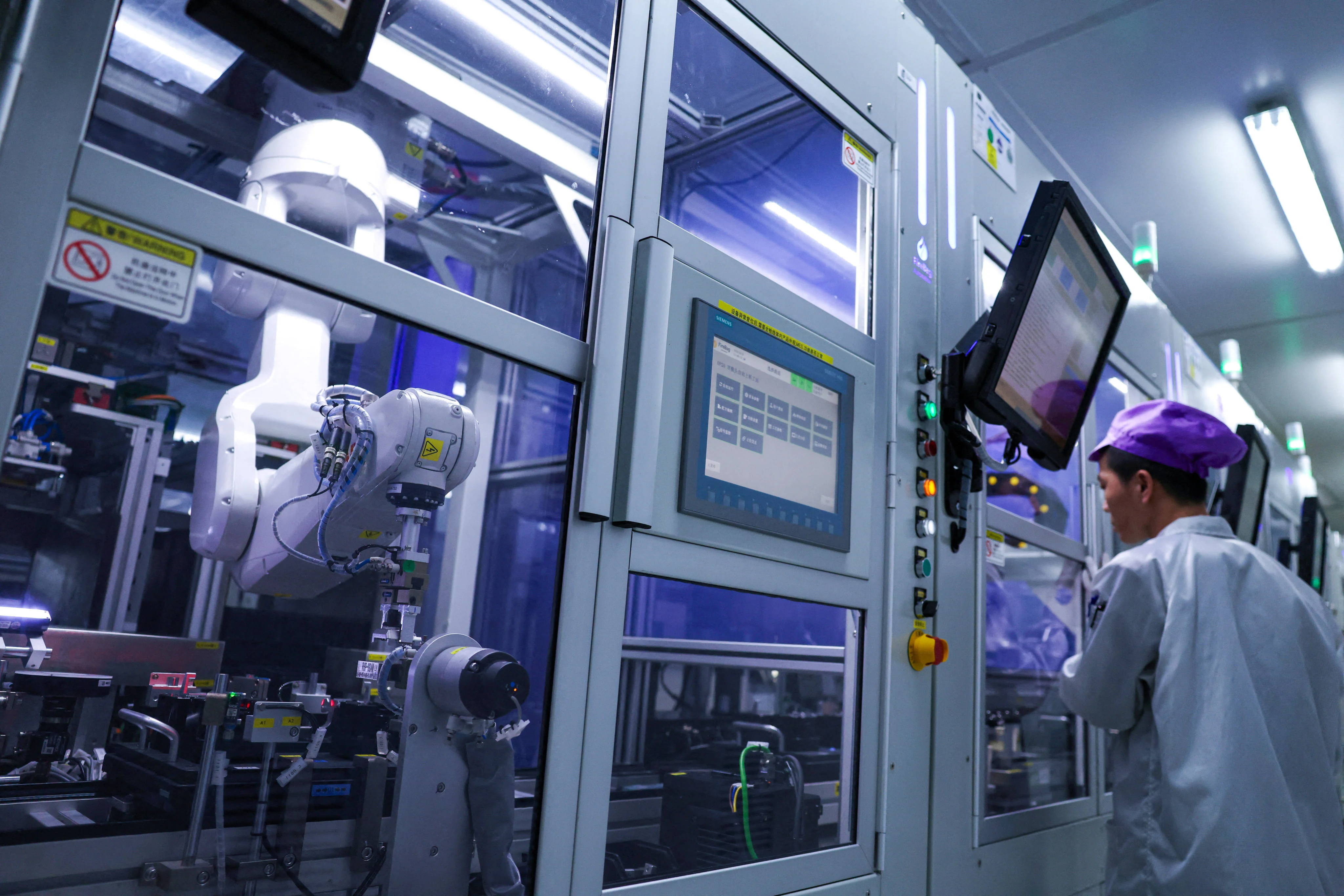
A robotic arm operates on an autonomous production line in Shenzhen.
Photo: Reuters The Guangdong-Hong Kong-Macau Greater Bay Area (GBA) is lagging behind China’s national average in basic research, despite showing strong potential in sectors such as semiconductors and smart manufacturing, according to Deloitte.
The cluster of cities in southern China, which included Shenzhen, spent about 28.9 billion yuan (US$4.2 billion) on basic research in 2024, accounting for just 5.67 per cent of total spending in research and development (R&D), the consulting firm said in a report released in Hong Kong on Thursday.
That compared with a national average of 6.9 per cent, and significantly higher levels of 14.5 per cent in the US and nearly 15 per cent in South Korea, according to the report. “Innovation in the GBA remains largely application-driven, with investment ramping up only when there are clear use cases, while basic science and original innovation remain relatively weak,” said Polly Lee, China deputy audit and assurance leader at Deloitte.
The GBA – comprising Hong Kong, Macau and nine mainland China cities – has emerged as one of the country’s most important technology hubs.
Anchored by Shenzhen – often dubbed China’s “Silicon Valley” – the region is home to leading firms such as Huawei Technologies, Tencent Holdings, DJI and BYD, forming a dense ecosystem spanning hardware, software and advanced manufacturing.
The GBA has emerged as one of the country’s most important tech hubs.
Photo: Edmond So Its rise had also intensified competition with other major innovation centres such as Beijing and Shanghai, where basic research accounted for 15 per cent and 10 per cent respectively, according to the London-based firm.
Deloitte said research and related talent demand in the GBA were heavily concentrated in core cities such as Shenzhen, Guangzhou and Hong Kong, which together accounted for about 87 per cent of the region’s research workforce, leaving smaller cities like Zhongshan and Huizhou facing shortages in talent reserves.
Much of the existing workforce remained tied to traditional industries, while incremental demand was shifting towards emerging sectors such as information technology, semiconductors and new energy, creating mismatches between talent supply and industrial upgrading.
Demand was also moving towards higher-skilled roles, with shortages particularly acute in positions such as telecommunications engineers, medical device R&D specialists a
原文链接: 南华早报