
Enact special law to send Japan’s warships to secure Hormuz, ex-adviser tells Takaichi
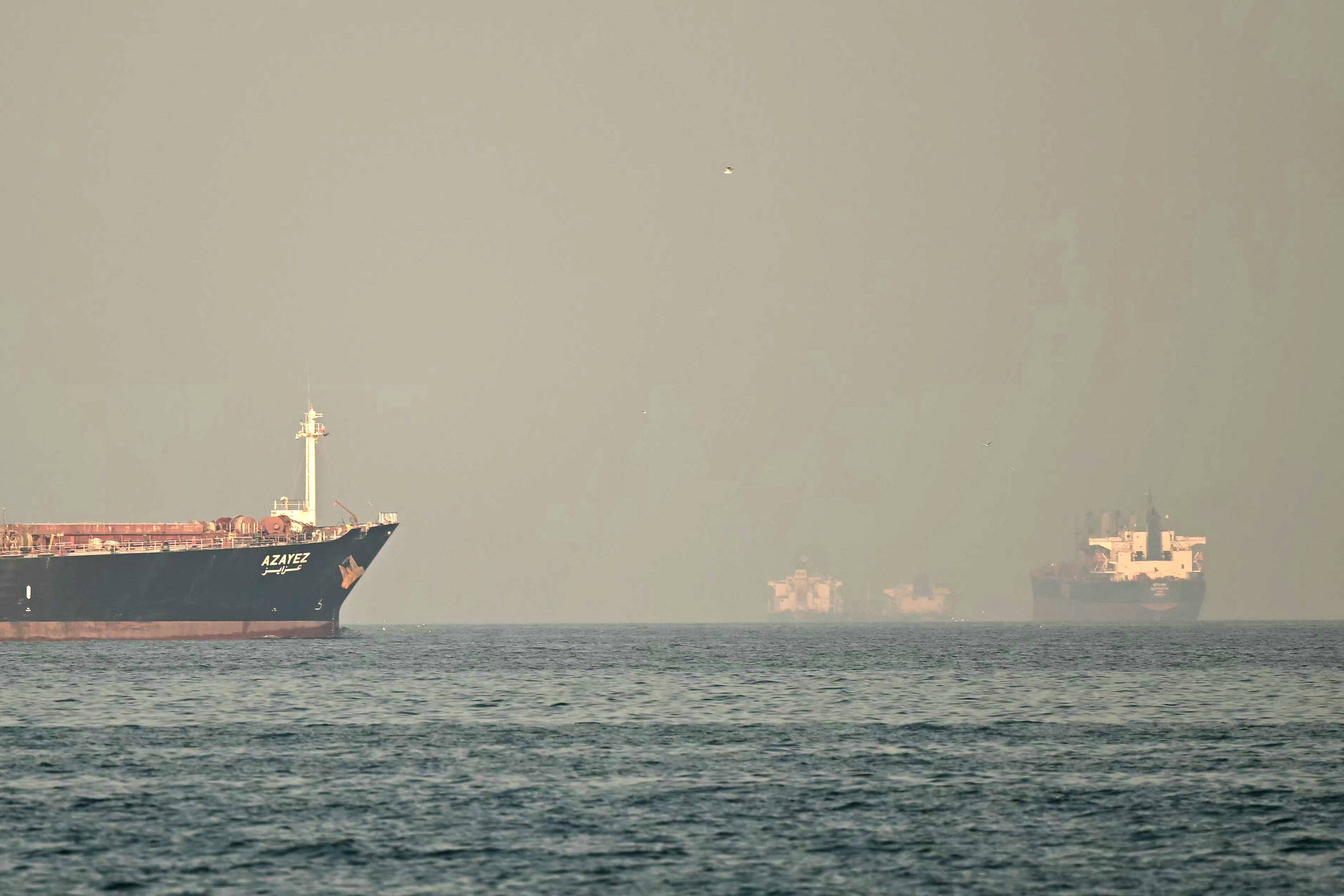
Cargo ships and tankers are seen off Fujairah in the Strait of Hormuz in the northern UAE last month.
Photo: AFP Japan should consider sending warships to help jointly secure the Strait of Hormuz with other nations and protect both its own vessels and those of other nations – even before a ceasefire, according to a former top national security adviser.
A special measures law would be needed to enable such a move, going beyond what Japan has done in past geopolitical conflicts, said Akihisa Nagashima, who served as a national security adviser to the predecessor of Prime Minister Sanae Takaichi.
The former deputy defence minister added that this would be possible without changing Japan’s pacifist constitution, which renounces war and significantly restricts its security activities abroad. “Taking the lead in protecting not only Japan, but also other nations will serve Japan’s national interest,” Nagashima said in an interview on Wednesday. “If necessary, we should enact a special measures law to ensure the safety of navigation in the Strait of Hormuz through the dispatch of the Self-Defence Forces.” Japan remains under pressure from US President Donald Trump to “step up to the plate” in securing the critical waterway, even though Takaichi avoided a direct confrontation during their summit in Washington on March 19.
The same day, Japan issued a joint statement with the UK, Germany, France, Italy and the Netherlands pledging to work together to ensure safe passage and stabilise global energy markets.
Japan should follow through on that commitment by developing the capability to protect not only Japanese-related oil tankers but also those operated by other countries, including the US, which Iran views as an adversary, and China, a regional rival, Nagashima said.
Otherwise, a prolonged disruption in the strait could work in Beijing’s favour. “China has larger reserves than Japan,” he said. “If China were to supply that energy to Asian countries in need, its influence and presence in the region would become incredibly significant.” Japan could initially send vessels for monitoring missions in waters surrounding – but outside – the Strait of Hormuz and the Persian Gulf, as it did during heightened Middle East tensions in 2019.
At that time, Japan did not join the US-led multinational initiative to protect commercial shipping in the area. “Demonstrating a proactive stance from the outset would have a significant impact on the Trump administration,” he said.
原文链接: 南华早报