
Iran war: Why a Trump climbdown won’t save Asia’s economies
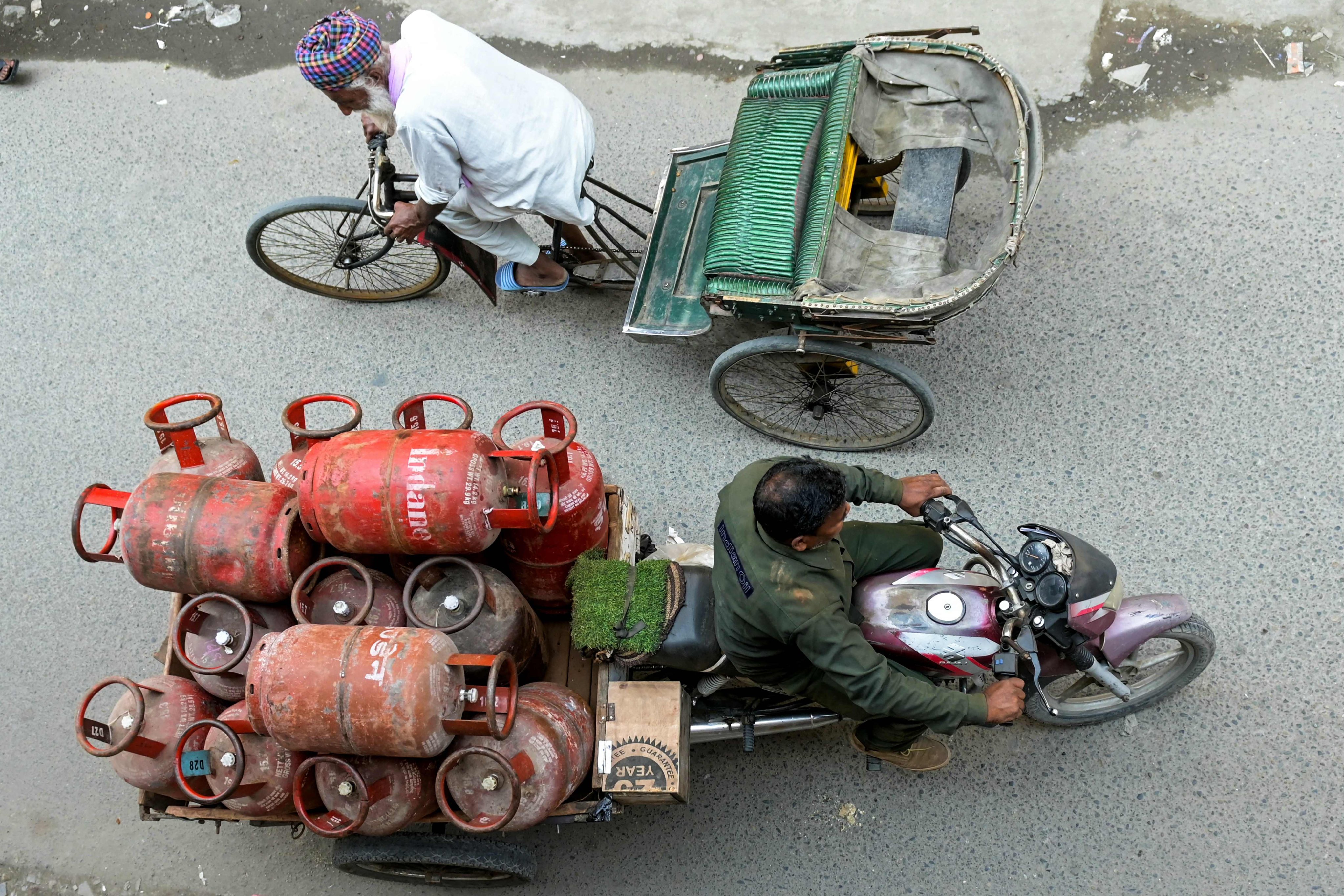
A delivery driver transports liquid petroleum gas (LPG) cylinders in Amritsar, Punjab state, in India on March 24.
Two more Indian-flagged tankers carrying LPG passed through the Strait of Hormuz on March 23, marking a fresh set of exceptions in the chokepoint disrupted by the Middle East war.
Photo: AFP For the second year in a row, Asia’s vulnerability to global shocks is a source of concern.
Almost exactly a year since US President Donald Trump launched his assault on the global trading system, the external dependencies of leading Asian economies have once again dimmed the outlook for the region.
Early last year, analysts were worried about Asia’s heavy reliance on exports to the United States.
Morgan Stanley pointed out that seven of the 10 countries running the largest trade surpluses with America were in Asia, putting them firmly in the crosshairs of the Trump administration.
The bank also noted that Taiwan, South Korea and Japan derived between 15 and 30 per cent of their corporate revenues from the US.
Yet by the end of last year, Wall Street banks were singing a different tune.
In a report last November, JPMorgan said: “Asia dodged a bullet in 2025.
Steep ‘Liberation Day’ tariffs were expected to markedly slow growth, but the region showed remarkable resilience.” The combination of Trump’s tendency to back off in the face of economic and market pressure, Asia’s position as a leading beneficiary of the boom in artificial intelligence (AI) and China’s weaponisation of its control of the supply chain for rare earths proved a boon for the region.
However, the energy shock triggered by the war in Iran is more severe and threatens to inflict lasting damage on Asia’s economies.
Before the war, China, India, Japan and South Korea accounted for 75 per cent of oil and 59 per cent of liquefied natural gas flows through the Strait of Hormuz.
In a report on March 17, Goldman Sachs said the supply shock was “unambiguously bad for Asia”.
Noting that “every economy of significance” in the region is an oil importer, it said “the surge in energy prices complicates – and, in more adverse scenarios, would derail – what had been a fairly positive outlook for many economies (especially China, Japan and tech-exposed exporters) in 2026”.
Yet just as Asia’s economies and markets had a lucky escape last year, most investors are betting that the worst-case scenario of a protracted war in the Middle East that causes energy prices to rise more sharply and leads
原文链接: 南华早报