
China’s lidar giants pivot to robotics as Jensen Huang praises Chinese supply chain
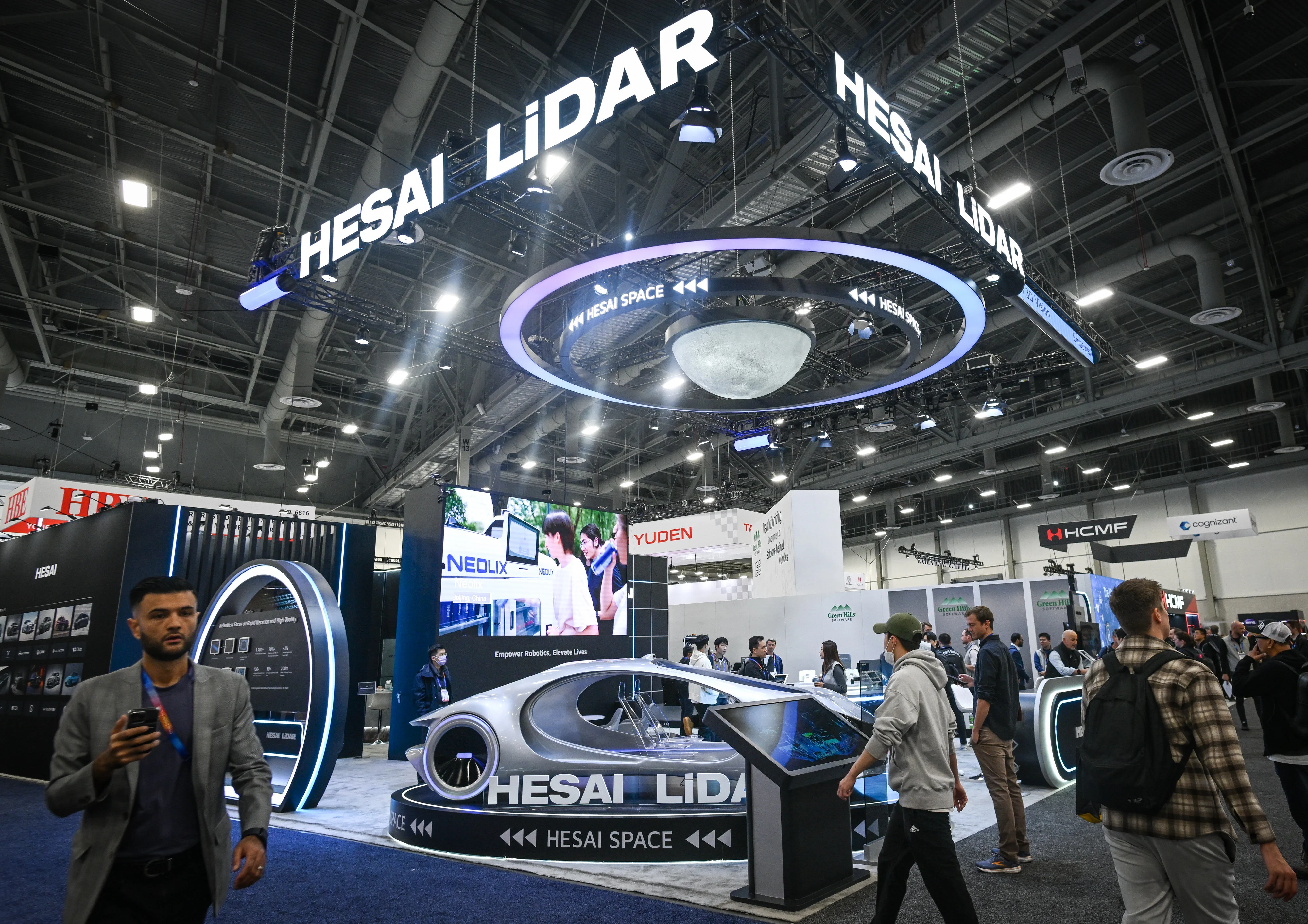
he Hesai booth at CES 2025 in Las Vegas, January 9, 2025.
Photo: NurPhoto via Getty Images China’s two biggest makers of lidar sensors for cars, Hesai Group and RoboSense Technology, have ramped up investments in robotics products as the country consolidates its leading position in building a global supply chain for the fast-growing sector.
Shanghai-based Hesai, the world’s largest producer of lidar sensors that help cars map terrain, planned to spend 200 million yuan (US$28.9 million) this year to design and manufacture “eyes and muscles” for robots, creating a new growth engine after it reported solid earnings for 2025, according to chief financial officer Andrew Fan. “With the rapid development of large language models over the past two years, business leaders have reached a consensus that the robotics industry is on the cusp of truly entering the commercialisation phase,” he told the South China Morning Post on Wednesday. “We will make substantial investment this year to expand our robotics segment.” Fan added that Hesai would unveil its technologies and products designed for robots in April.
Short for “light detection and ranging”, lidar sensors use lasers to measure the distance to objects.
Smart cars can use this data to build highly accurate maps of their surroundings.
A Unitree G1 humanoid dances at the International Robot Exhibition in Tokyo, December 3, 2025.
Photo: Reuters Since robots need to assess their environment to navigate safely, lidar sensors create accurate three-dimensional maps of surroundings to enable them to understand spatial relationships with different objects.
Also on Wednesday, Mark Qiu, CEO of Shenzhen-based RoboSense, said lidar sensors would witness breakneck growth buoyed by physical artificial intelligence. “Our robotics business delivered 303,000 units for the [past] year, ranking No 1 globally, with performance significantly exceeding expectations,” he said in a statement after RoboSense posted its first-ever quarterly profit. “Our ultimate vision is to make lidar a ubiquitous category, as essential and ever-present as the common camera.” Qiu added that RoboSense, through its proprietary chipsets, would expand its robotics segment by constantly offering “generational-lead” lidar sensors.
The push by lidar makers into the new sector comes amid Beijing’s quest to turn the country into a global robotics leader supported by a strong supply chain for the industry.
Hesai CFO Andrew Fan in photo taken in Hong Kong,
原文链接: 南华早报