
Germany’s Merz floats EU-China trade deal as capitals soften on Beijing
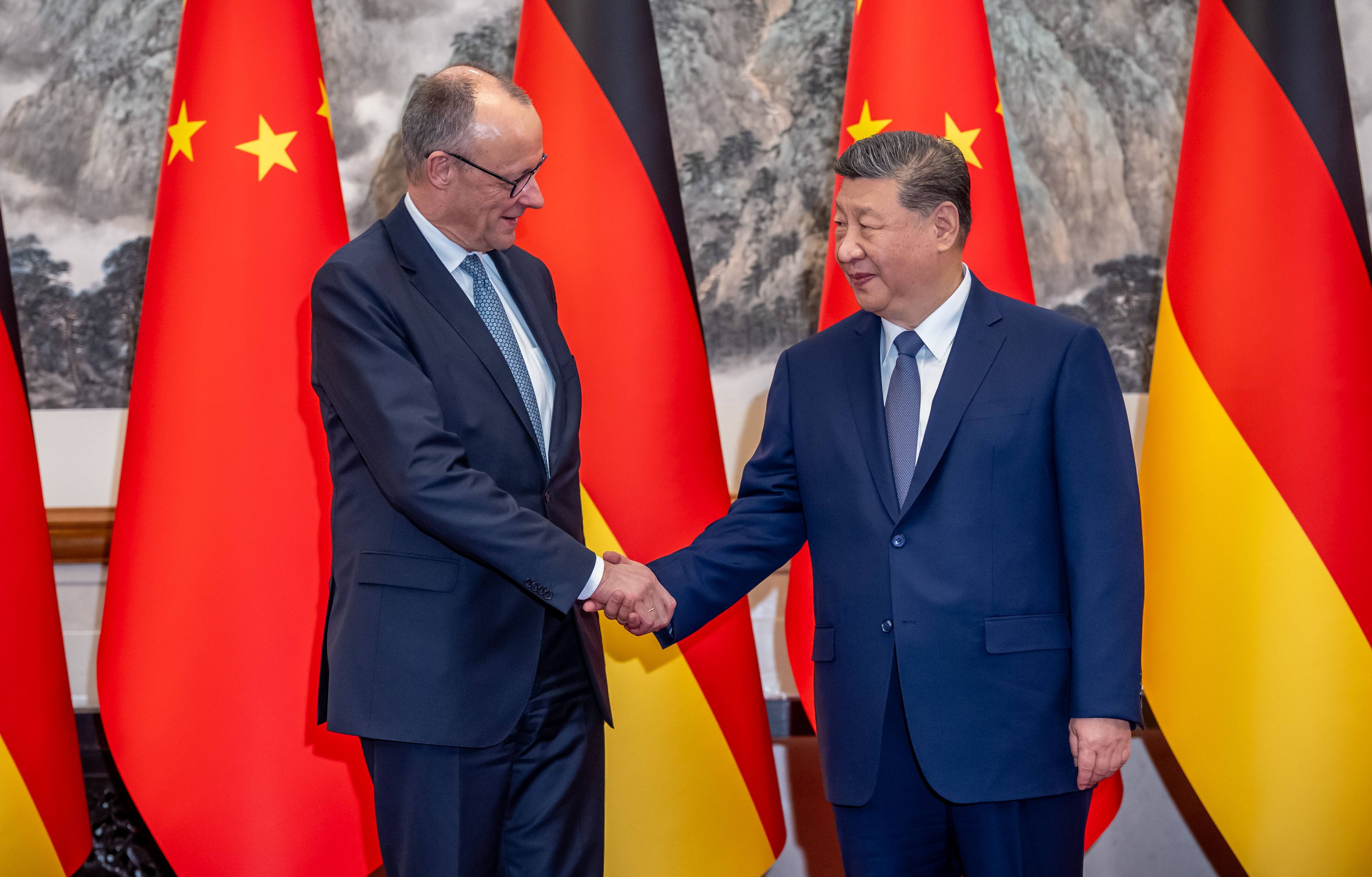
German Chancellor Friedrich Merz and Chinese President Xi Jinping meet at the Diaoyutai State Guesthouse in Beijing on February 25.
Photo: dpa German Chancellor Friedrich Merz has said he can imagine a trade deal with China in the future, signalling a new softening stance towards Beijing in European capitals. “We have set quite a lot in motion when it comes to trade policy.
I can also envisage further agreements, for example, in the longer term an agreement with the People’s Republic of China,” Merz said in the German parliament on Wednesday.
Merz’s remarks underscore how surging trade and geopolitical tensions with Washington are nudging parts of Europe towards a more accommodating stance on China, even as Brussels insists the conditions for any formal deal remain far from being met.
Beijing has been putting the feelers out regarding a potential trade pact with the 27-member union for months, as a flurry of EU leaders and ministers have travelled to the Chinese capital.
Merz’s comments – weeks after he returned from his first visit to China as chancellor – suggested the overtures had found receptive ears. “We now need strategic partnerships around the world in order to strengthen ourselves, especially our exports,” Merz added, in comments sparked by a trade deal agreed between the EU and Australia this week.
Australian Prime Minister Anthony Albanese and European Commission President Ursula von der Leyen walk together after an address at Parliament House in Canberra on Tuesday.
Photo: AAP via Reuters According to sources in Brussels, there were no immediate plans to launch free-trade talks with China, as the EU would prefer that Chinese leaders fix problems in the trading relationship.
The EU asserts that Beijing is ignoring its complaints about the opacity of China’s state subsidies and what it describes as the resulting industrial overcapacity and surge in cut-price exports to Europe.
Beijing’s export controls on rare earths, meanwhile, have become a spoiler in the relationship since their imposition last year.
In a speech in Australia on Tuesday, European Commission President Ursula von der Leyen said the bloc “cannot and will not absorb China’s export-led growth model and its industrial overcapacity”. “Both the threat to our supply-chain security and the shock to our industrial base need urgent responses.” Across the first two months of 2026, China’s trade surplus with the EU expanded by 40 per cent, and 139 per cent in the case of Germany,
原文链接: 南华早报