
UK blocks China wind turbine project on ‘national security’ amid tense business climate
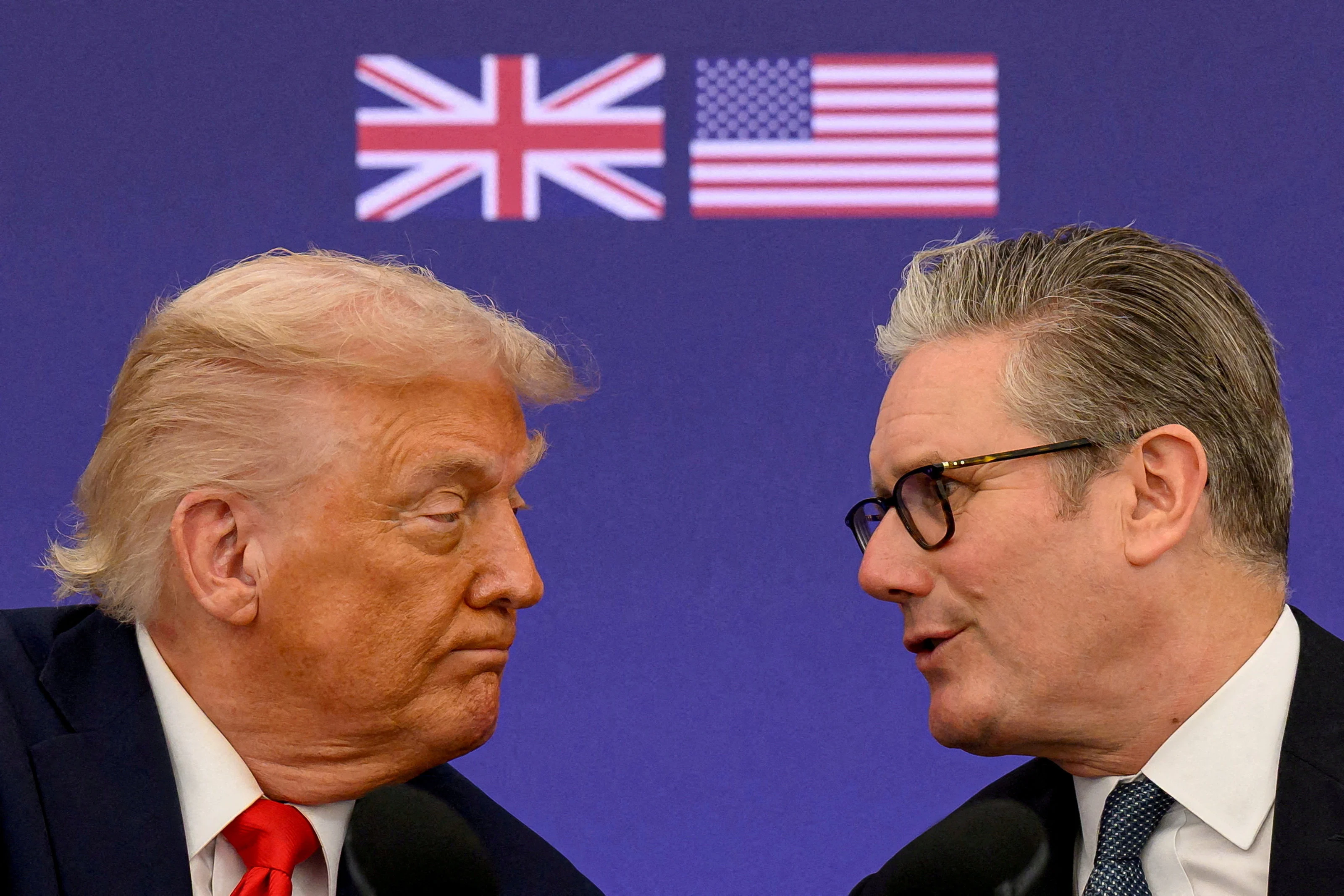
US President Donald Trump and British Prime Minister Keir Starmer announce an agreement between the two countries on September 18, 2025, in Aylesbury, Britain.
Photo: Reuters Britain’s decision to block a £1.5 billion (US$2 billion) plan by Chinese clean energy giant Mingyang to build the UK’s largest wind turbine factory in Scotland highlights the mounting challenges of doing business with China in an era of deepening global mistrust, analysts said.
The move was likely the result of direct pressure from Washington, a source familiar with the matter said on Thursday.
The US-Israeli war in Iran and the subsequent energy crisis had raised hopes for the project to be approved, but “political considerations, including geopolitical pressures, had ultimately trumped commercial ones”, the source said.
The project had long been contentious.
At home, it drew opposition from certain British politicians, while the administration of US President Donald Trump and some American lawmakers also voiced concerns.
Republican congressman John Moolenaar, chairman of the House select committee on the Chinese Communist Party, told the Telegraph in October that approving the project would “defy common sense”, warning it would deepen the UK’s dependency and heighten vulnerability in its energy supply chain.
Announcing the decision on Wednesday, the UK government said that after “careful consideration” it could not support the use of Mingyang’s turbines in offshore wind projects. “We will always act to protect our national security, and we are committed to strengthening and prioritising resilient and sustainable offshore wind supply chains,” a government spokesperson said.
David Henig, UK director at the European Centre for International Political Economy think tank, said the move illustrated the challenge Britain faces in balancing trade and investment in an era of global mistrust.
Mingyang had proposed the facility at Ardersier Port near Nairn last year, saying it could create up to 1,500 jobs and would become the country’s largest wind turbine manufacturing plant.
In a statement, the Chinese firm said it was disappointed by the decision “not to allow Mingyang’s world-leading technology to be used,” but added that it would continue to “engage constructively with the UK government”, according to British media.
Mingyang did not immediately respond to the South China Morning Post’s request for comment.
The UK government on Wednesday also announced plans for Danish firm V
原文链接: 南华早报