
Google’s TurboQuant AI advance dents memory-chip stocks, but analysts say ‘buy the dip’
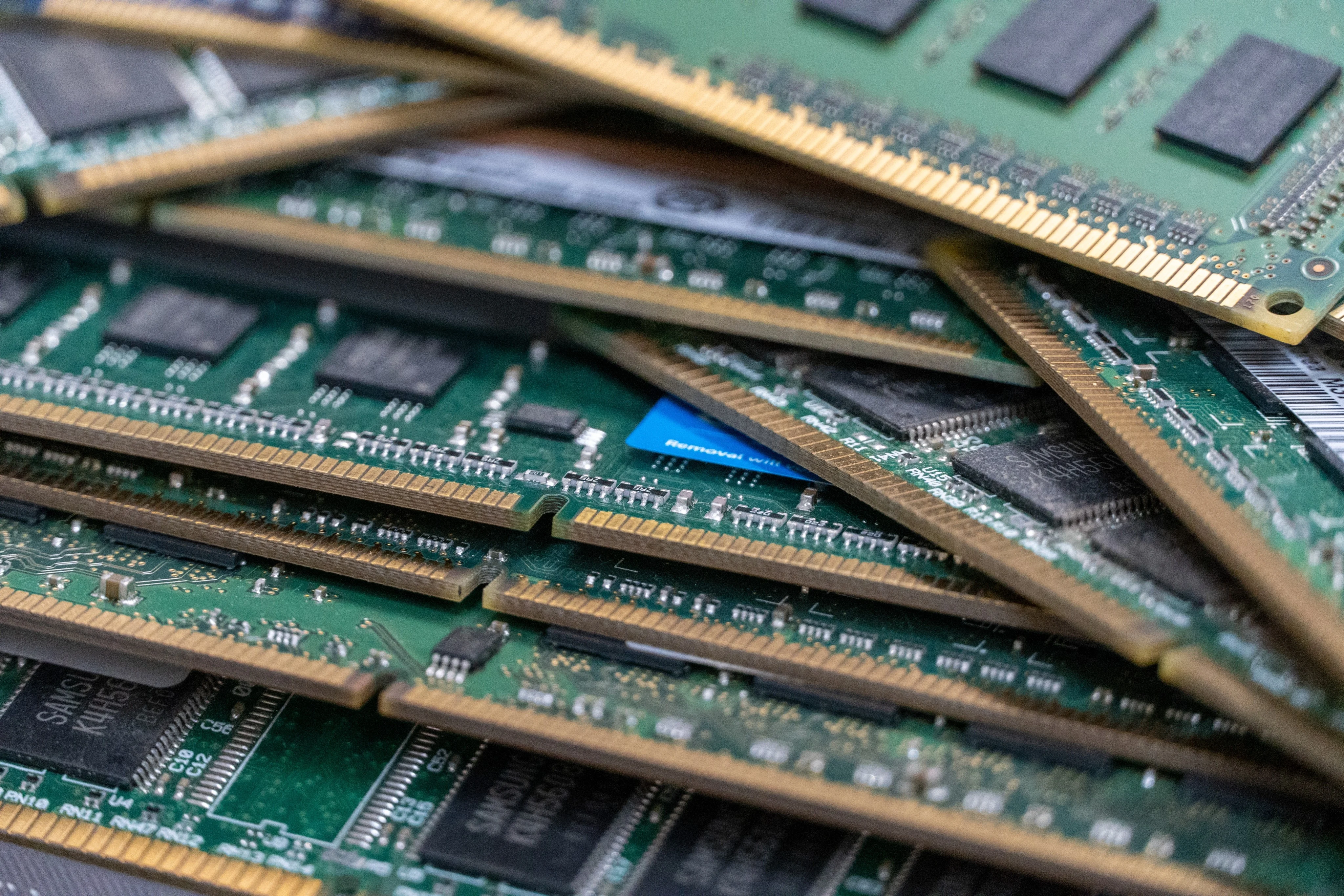
A decline in memory firms’ share prices started with Samsung and SK Hynix, then extended to include Chinese memory firms GigaDevice Semiconductor and Montage Technology.
Photo: Shutterstock Images A new artificial intelligence algorithm developed by Google that could reduce demand for memory chips triggered a slump in global memory stocks, but analysts said it presented an opportunity for investors to “buy the dip”.
Shares in memory giants including Samsung and SK Hynix fell after Google said in a blog post on Tuesday that the algorithm, called TurboQuant, reduced the memory demands of key-value (KV) caches – a crucial component of how AI models are served to users – by six times through “extreme compression” of information.
Investors panicked that the efficiency gains would dampen demand for memory chips.
The corresponding research paper for TurboQuant was published in April.
The immediate market pullback extended to major Chinese memory firms GigaDevice Semiconductor and Montage Technology, whose shares in Shanghai fell by 5.89 and 3.53 per cent, respectively, on Thursday.
However, analysts said that TurboQuant was instead a boon for memory and the AI industry overall.
By increasing the amount of throughput possible with each chip, TurboQuant meant that inference costs would fall, said Shawn Kim, Morgan Stanley’s head of Asia technology research, in a research note on Thursday.
The diverging views underscore huge demand-side uncertainties surrounding the future of the unprecedented AI infrastructure buildout under way, amid continued concerns over an AI bubble that has driven up the valuations of memory and semiconductor companies worldwide.
Rather than reducing demand for memory chips, however, TurboQuant could have the opposite effect because of the so-called Jevons Paradox, where efficiency gains increase total demand as services become cheaper to access, spawning more users and use cases, Kim said.
The concept is named for 19th-century economist William Stanley Jevons. “TurboQuant is less about incremental optimisation and more about shifting the cost curve of AI deployment,” Kim said. “Models that need cloud clusters can fit on local hardware, effectively lowering the barrier to deploying AI at scale.
More applications become viable, more models remain active and utilisation of existing infrastructure improves.” A woman visits an AI exhibition at the Zhongguancun Exhibition Center in Beijing on March 25, 2026.
Photo: Xinhua TurboQuant wa
原文链接: 南华早报