
Nepal’s probe into deadly uprising finds ex-prime minister, officials ‘reckless’
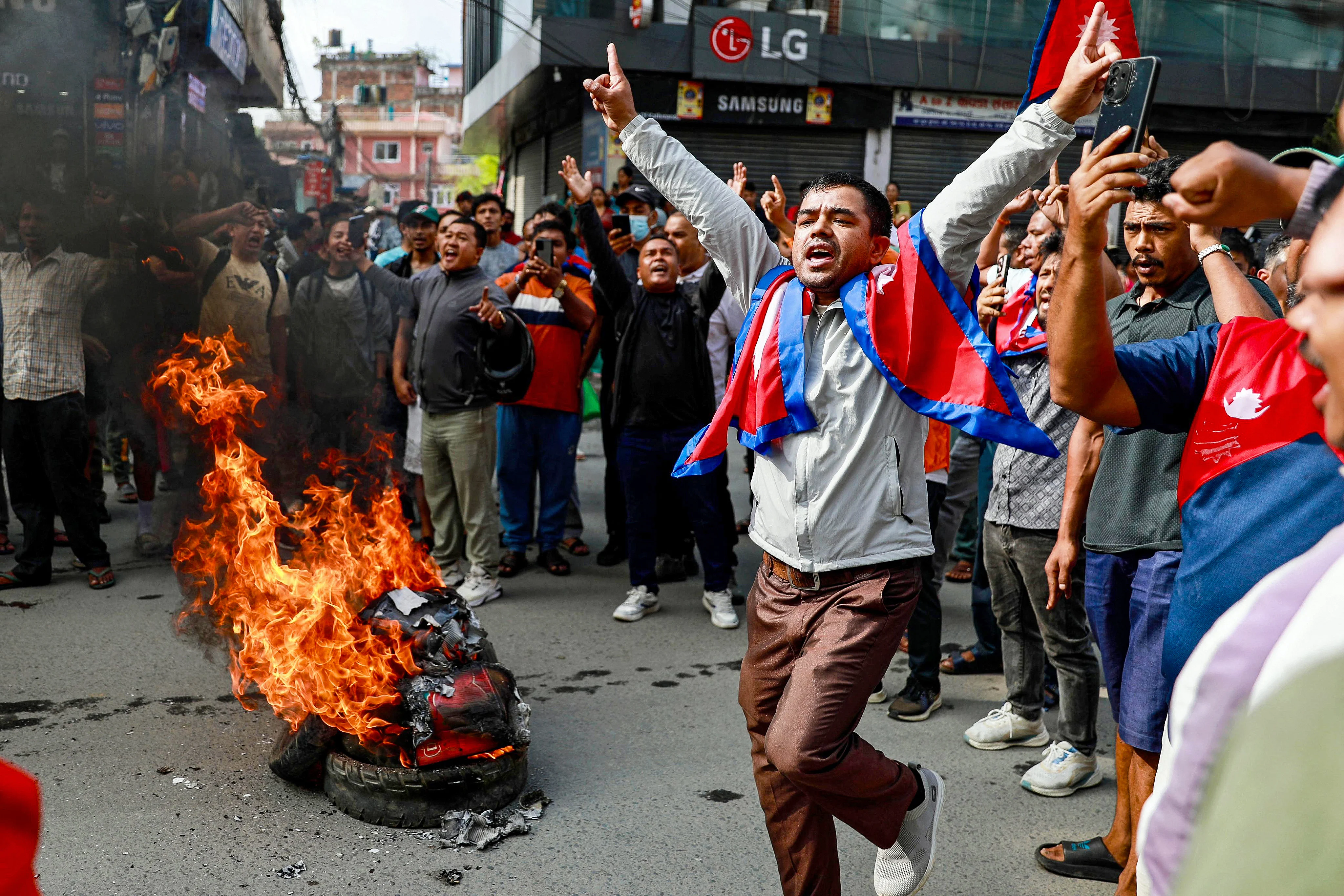
People burn tyres during a demonstration in Kathmandu on September 9 to condemn the Nepali police’s deadly crackdown on protesters.
Photo: AFP A high-level probe in Nepal holds former prime minister K.P.
Sharma Oli and other senior government officials responsible for criminal negligence over the shootings in last year’s deadly youth uprising that killed 76 people, as the leak of the crucial report to a local publication has triggered criticisms due to its sensitive nature.
The committee, led by former judge Gauri Bahadur Karki, has recommended investigation and prosecution of Oli, his home minister Ramesh Lekhak, and former Inspector General of Police Chandra Kuber Khapung for “negligent and careless conduct” that led to a high number of casualties.
The report proposes prison sentences of up to 10 years for the officials. “There was a deliberate violation of duty,” the report said. “There was no effort made to stop it … or to issue corrective orders to stop the use of lethal force.” The 900-page report was leaked to local media and first reported by Nepali tabloid Jana Aastha on Wednesday, two weeks after its submission to the interim government.
The leak comes as Nepal prepares to swear in a new government on Friday amid criticisms that the current government, led by interim Prime Minister Sushila Karki, has kept the report under wraps. “The Nepal government must now officially make the investigation public so that we know the veracity of the full report,” said Pradip Gwayali, a youth activist. “From the leaked report, we know that it has explained the events of September 8 in detail, but it did not delve into what unfolded on September 9.
That should be fully investigated, too.” A picture of former Nepali prime minister K.P.
Sharma Oli lies on the floor in a building that houses the Prime Minister’s office after the deadly anti-corruption protests last year.
Photo: Reuters Thousands of young Nepalis – mostly from Generation Z – took to the streets on September 8 in an anti-corruption protest sparked by the government’s social media ban.
A deadly crackdown by security forces triggered riots and arson the following day, with crowds torching key public buildings, including the government secretariat and the supreme court, along with schools and business houses, causing an estimated 8.5 billion rupees (US$57.8 million) in damages.
The report found that of the 63 bodies sent for autopsy, 48 died from gunshot wounds due to “reckless and negligent ac
原文链接: 南华早报