
Are US and China looking for ‘minimum stability’ after going through a ‘rough patch’?
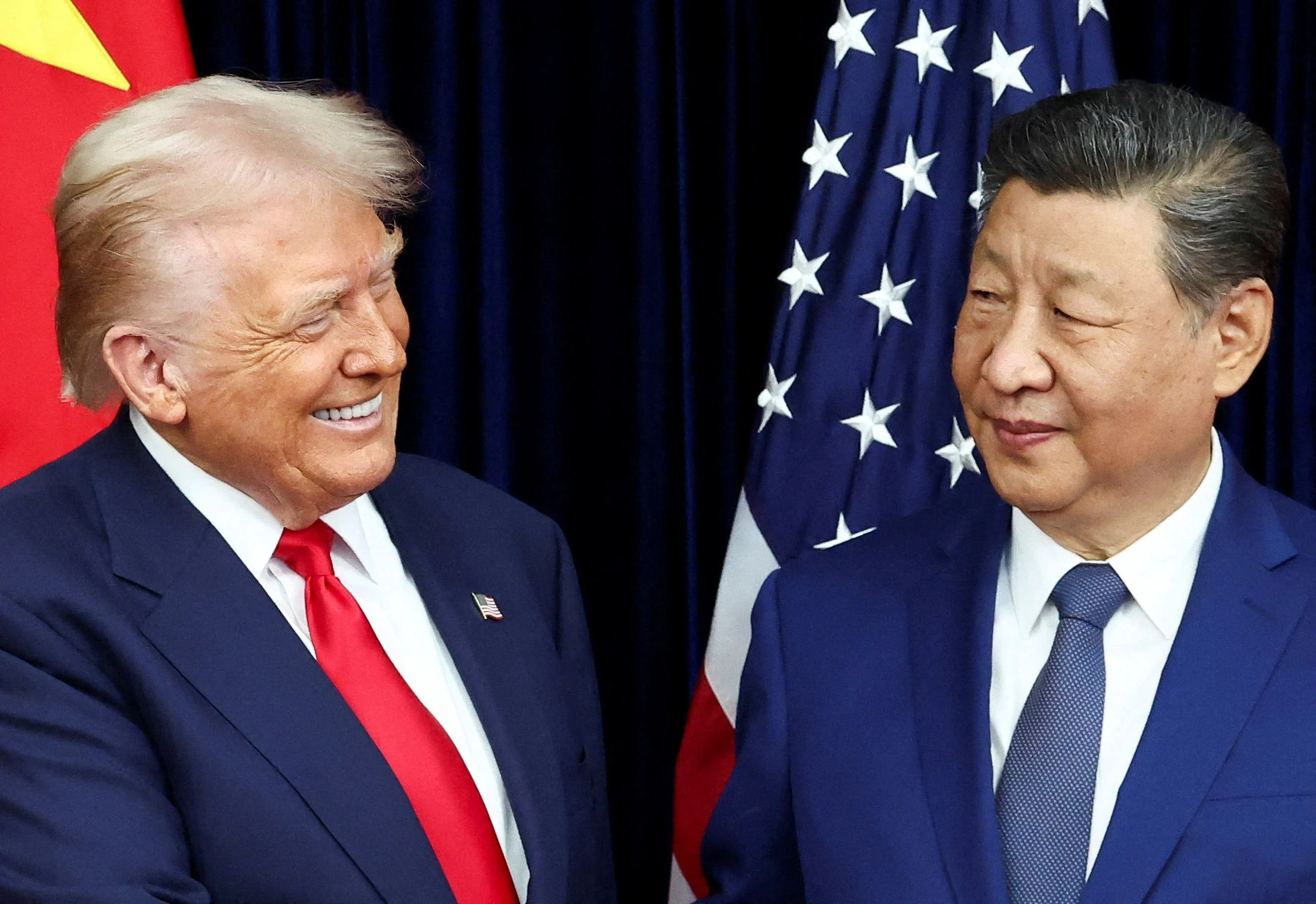
Presidents Donald Trump and Xi Jinping pictured at their most recent meeting in South Korea last year.
Photo: Reuters China and the United States are trying to navigate their differences to ensure that they maintain a basic level of stability in their relationship, an academic conference in Beijing heard last week.
At the forum held by Tsinghua University in Beijing on Friday, academics and former officials discussed the need to prevent open confrontation.
US President Donald Trump’s planned visit – now postponed for “five or six weeks” as he focuses on his war with Iran – was seen as a key opportunity by many speakers.
Susan Thornton, the former assistant secretary of state during Trump’s first term, told the event: “We don’t really use the word ‘engagement’ … any more,” she said, describing the relationship as an “overlapping complex of interests” that required constant, clinical management.
Thornton said both sides now realised they must focus on a “minimum level of stability” as they emerged from a “rough patch” – a reference to tariffs and sanctions.
She said the two sides should set up institutional guardrails, adding “you’ve got to have dialogue, communication mechanisms and leader-to-leader meetings”.
Diao Daming, a professor at Renmin University’s school of international studies, said the two sides were trying to “maintain overall stability on multiple levels”. “In fields seen as core to competitiveness, Washington has continued to pursue a decoupling stance,” Diao said. “Yet in vital areas such as trade and economics, the two sides have maintained a normal dynamic – one of mutual restraint and a balance of confrontation and negotiation.” Diao argued that this would help the two sides plan longer-term strategies, including “what kind of relationship will be most beneficial for the next five years”.
Foreign Minister Wang Yi has said this year would be a “landmark” one for US-China relations.
Zhou Bo, a former senior colonel and senior fellow at Tsinghua’s Centre for International Security and Strategy, said the relationship between the two countries was one where “competition prevailed over cooperation”.
Zhou argued that “if you compare the strength of China and the United States, the United States is still stronger” but added that success would ultimately be determined by which country “made fewer mistakes” and was best able to influence other countries.
Yu Jie, a senior research fellow on China in the Asia-Pacific Programme at London-b
原文链接: 南华早报