
US offers up to US$3 million bounty for information on finances of powerful Haiti gangs
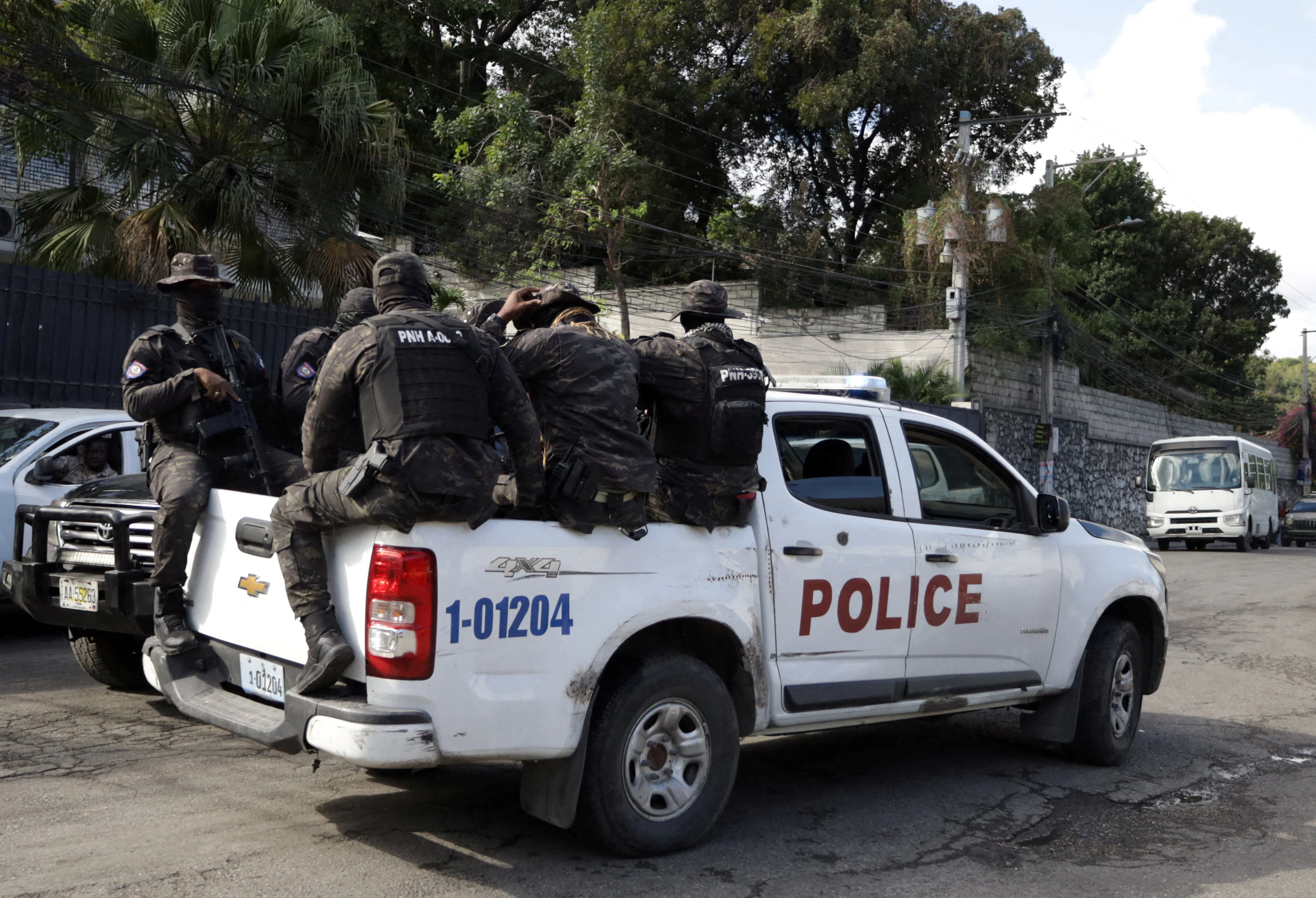
Haitian security forces on patrol in Port-au-Prince amid a wave of gang violence.
Photo: Reuters The United States on Wednesday offered a reward of up to US$3 million and possible relocation in exchange for information on the financial activities of Haiti’s Viv Ansanm and Gran Grif criminal groups.
Washington has designated both groups, which bring together hundreds of gangs in the capital Port-au-Prince, agricultural Artibonite region and central Haiti, as terrorist organisations.
The US announcement marks a shift in tactics as previous bounties have been focused on individual gang leaders.
Haitian security forces, with the support of a partially deployed UN-backed force and a US private military company, have intensified attacks on armed gangs that control most of the capital but have yet to make a major gang leader’s arrest.
Once dependent on sponsorship from elites, Haiti’s gangs have grown more economically independent as they cemented control over the capital and extended to rural areas in recent years.
Besides controlling roads and checkpoints, they are accused of collecting funds through extortion, thousands of ransom kidnappings, gun, drug and organ trafficking, and theft of vehicles, buildings and crops.
Children play at a shelter for families displaced by gang violence, in Port-au-Prince, Haiti.
Photo: AP More than a million people have been displaced by the conflict with gangs, which has exacerbated food insecurity, and close to 20,000 have been reported killed in Haiti since 2021.
The death toll has climbed every year.
According to the United Nations, most gang killings are the result of firearms brought illegally into the country, with many believed to come through US ports in Florida and Georgia.
According to a report released on Wednesday by Mercy Corps, which surveyed thousands of displaced people across the capital Port-au-Prince, 99 per cent had no job or income after being displaced and 95 per cent felt unsafe in their new lodgings.
Less than half had access to a functioning toilet and most were eating less than two meals a day.
Just a third of children were attending school and a third of women said they had suffered physical or sexual violence at the displacement site, the report found.
The UN estimated 1.45 million people were internally displaced across Haiti by the end of last year, with more than 400,000 displaced in the past year alone.
原文链接: 南华早报