
China’s consumer goods factories cut output as Iran war sends costs soaring
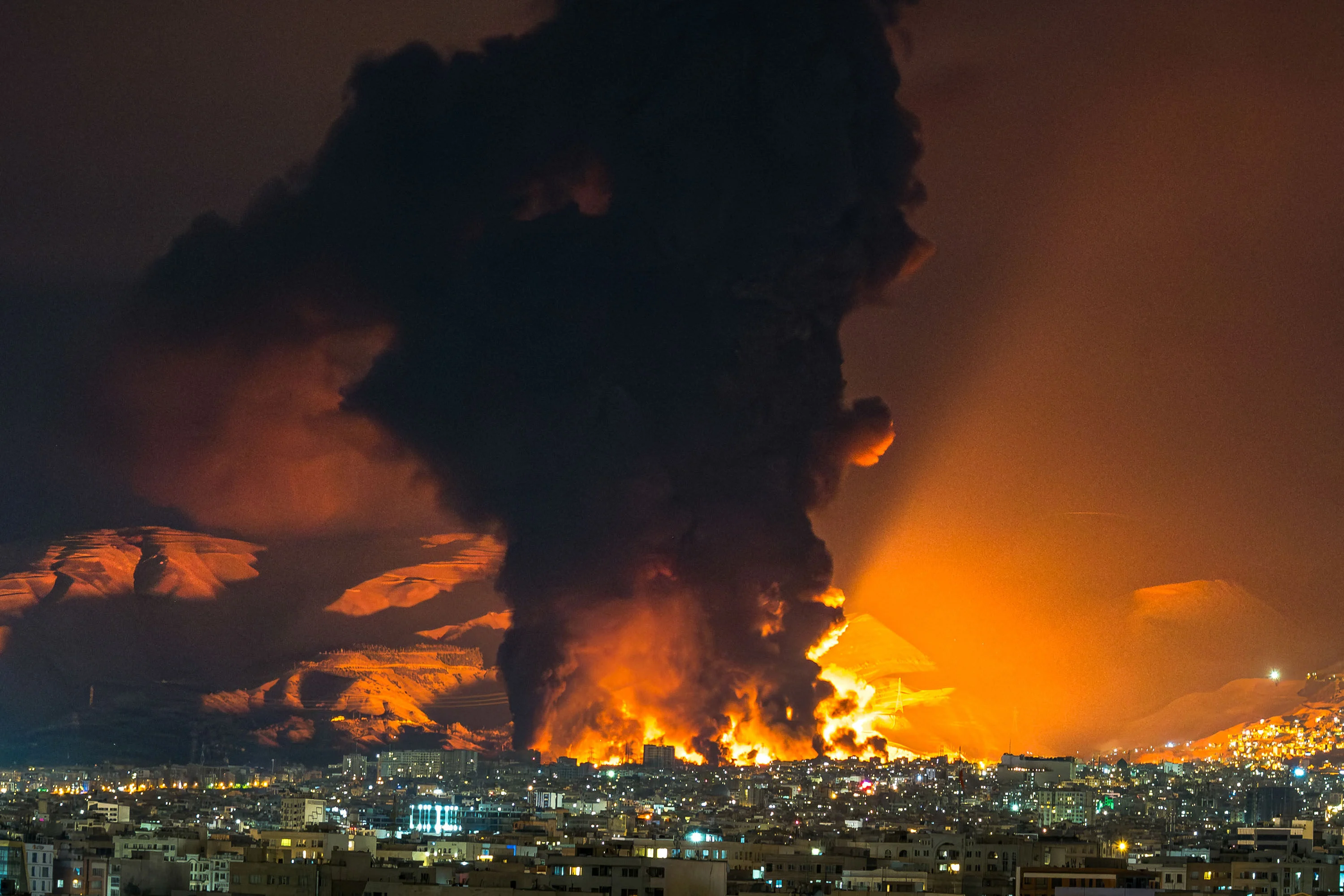
Smoke and flames rise above Tehran after air strikes on an oil depot on March 7.
The economic disruptions caused by the US-Israel war on Iran have pushed up costs for Chinese manufacturers, causing some factories to halt production.
Photo: TNS The disruption to shipping traffic along the Strait of Hormuz is starting to bite in China, where some manufacturers are reducing production due to soaring energy, raw material and freight costs.
Zhao, who runs a bicycle factory in Guangzhou serving clients in the United States, Middle East and Europe, has already put most export business on hold. “We also cancelled all orders from Iran,” he said. “The cost of aluminium, a key raw material for bicycle production, has risen by 30 per cent.” Logistics costs have also climbed by about 15 per cent, and deliveries are increasingly being delayed, according to Zhao. “With costs rising across the board, I’ve had little choice but to suspend factory operations for now and wait things out,” he said.
He is not alone.
Zhang, a Chinese national who runs a facility in Vietnam supplying parts and accessories to appliance and car manufacturers, said his business had already had to extend delivery times due to rising logistics and raw material costs. “The pressure from rising costs has become very clear this year,” he said. “Prices for iron ore, scrap steel, coking coal, copper and plastics have all continued to rise, directly pushing up our production costs.” Shipping costs for his finished products have surged by 50 to 100 per cent, he added, while road freight costs on the China-Vietnam border have also climbed by 15 to 30 per cent due to the rise in global oil prices. “The overall pressure on our business is significant, and the only real way to contain costs is to cut energy use wherever possible,” Zhang said. “Some of our raw material inventories will last only about three weeks.
Once they run out, we probably won’t be able to take new orders for quite some time.” Shipping traffic along the Strait of Hormuz remains at a trickle amid the ongoing US-Israel war on Iran.
Only 144 commercial vessels had transited the waterway so far this month as of Tuesday, down 95 per cent from pre-war levels, Agence France-Presse reported, citing data from market intelligence firm Kpler.
Wang Chao, a senior analyst at Guangzhou Quantitative Consulting, said the conflict had already pushed up the cost of chemical feedstocks, with prices for several key materials including acrylic acid risi
原文链接: 南华早报