
Middle powers are taking up the mantle of multilateral leadership
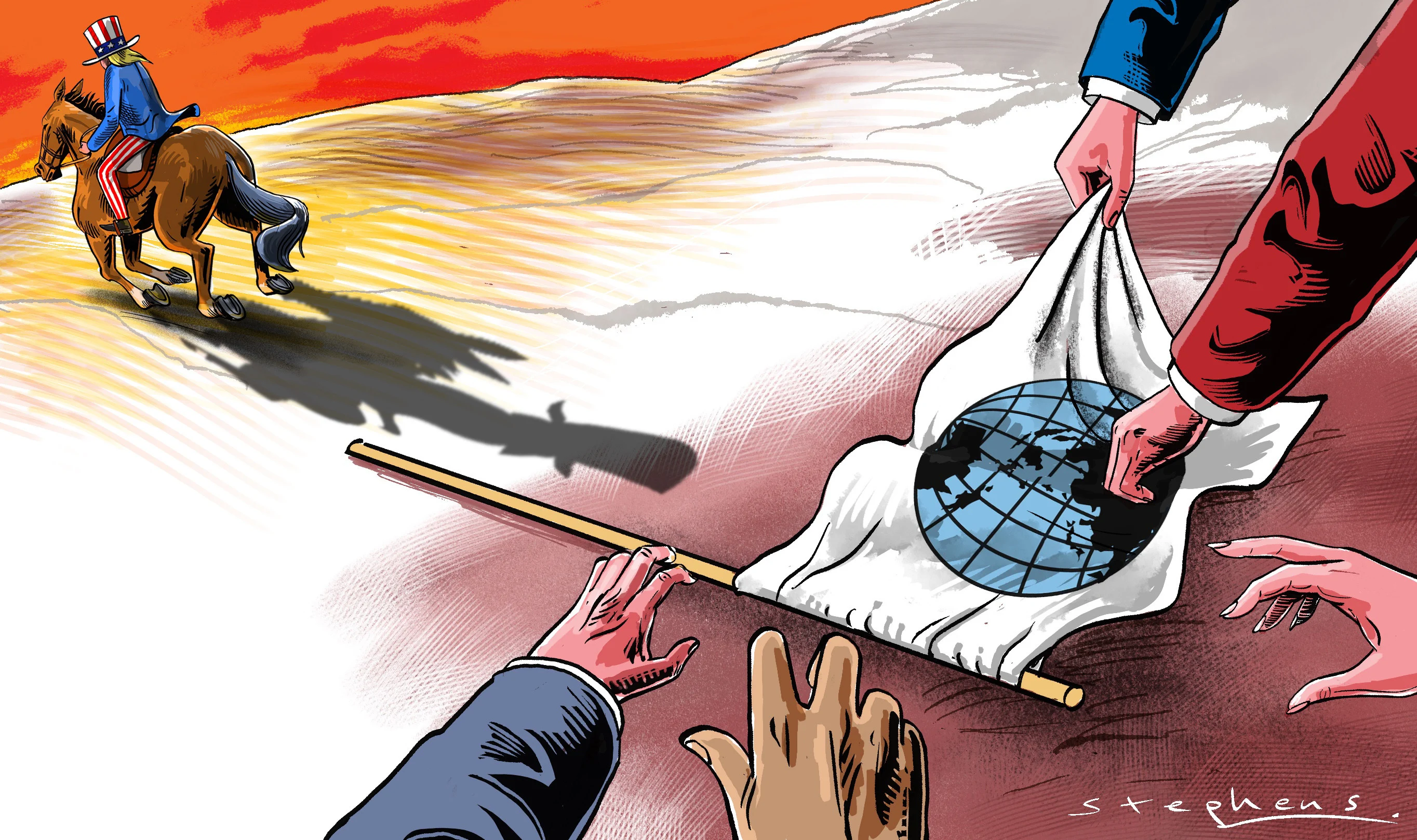
Illustration: Craig Stephens For much of the post-war era, the architecture of global governance rested on the simple assumption that the United States would support the systems it largely designed and uphold the rules it helped to create.
The first Trump administration was no isolated incident.
Now, from the vantage point of 2026, amid the US-Israel attack on Iran and the subsequent closing of the Strait of Hormuz, it is quite clear that there is little sign of an appetite in Washington for the US to once again safeguard the order it helped create.
Yet the retreat of one great power does not mean the collapse of globalisation or multilateralism.
Instead, the torch has passed to middle powers who are coming together in flexible formations to sustain the institutions that underpin globalisation and multilateralism.
Canadian Prime Minister Mark Carney expressed this critical juncture at the World Economic Forum in Davos in January, where he laid to rest hopes of a return to normal.
He argued, quite rightly, that countries must increasingly build flexible forms of cooperation rather than rely solely on rigid ideological blocs.
As we enter a “Romance of the Three Kingdoms period” in global politics, the Comprehensive and Progressive Agreement for Trans-Pacific Partnership (CPTPP) stands as an example of middle-power agency.
When the US abandoned the original Trans-Pacific Partnership, the framework verged on collapse.
Yet it did not.
Instead, a coalition of middle powers, including Japan, Canada, Australia and other economies, rallied to save it in a revealing experiment in middle-power leadership.
The agreement’s constituent economies account for roughly 15 per cent of global gross domestic product and represent some of the most dynamic trading nations in the Asia-Pacific, and it now includes the United Kingdom.
Malaysian Prime Minister Anwar Ibrahim (left) and Turkish President Recep Tayyip Erdogan shake hands as they formalise agreements in Ankara, Turkey, on January 7.
Photo: Xinhua The CPTPP is just a single facet of an emerging architecture as middle powers ranging from Group of Seven members to regional actors – such as Turkey and India – respond to a world where the US no longer anchors the security and economic architecture of the international system.
That does not mean the US has ceased to matter, but it does mean even its formerly close middle-power allies are beginning to exercise greater autonomy.
But today, the agreement is more i
原文链接: 南华早报