
Iran rejects US ceasefire plan, issues own demands as strikes land across the Middle East
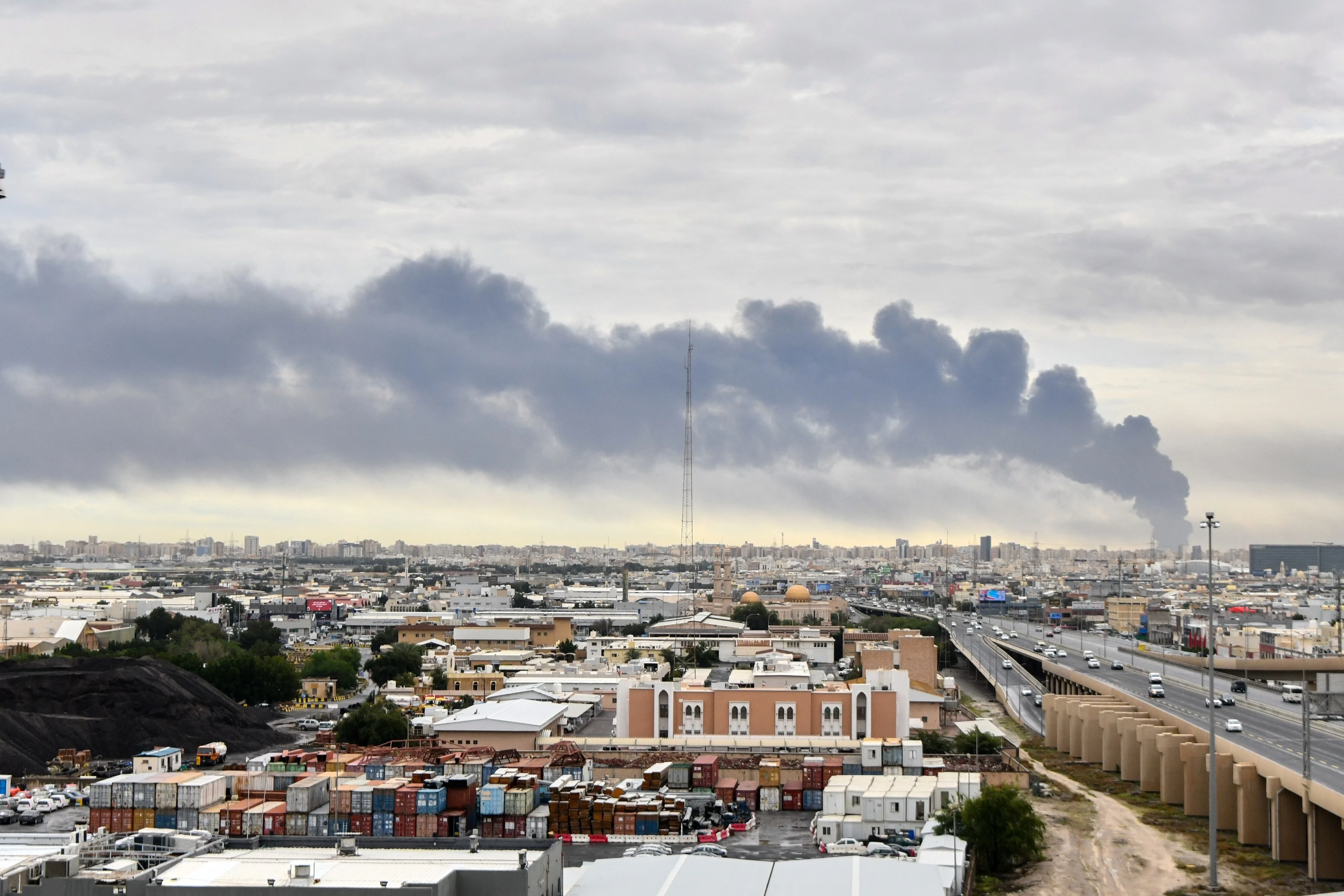
Smoke rises from Kuwait international airport after a drone strike on fuel storage in Kuwait City, Kuwait on Wednesday.
Photo: AP Iran on Wednesday dismissed an American plan to pause the war in the Middle East and launched more attacks on Israel and Gulf Arab countries, including an assault that sparked a huge fire at Kuwait International Airport.
Iran’s defiance came as Israel launched air strikes on Tehran and as the United States deployed paratroopers and more Marines to the region.
Iranian state television’s English-language broadcaster quoted an anonymous official as saying Iran rejected America’s ceasefire proposal and has its own demands for an end to the fighting. “Iran will end the war when it decides to do so and when its own conditions are met,” the hardliner-controlled Press TV quoted the official as saying. “My message to the neighbouring countries: distance yourself from the US,” Reuters quoted Iran’s Foreign Minister Abbas Araqchi as saying.
Earlier, two officials from Pakistan, which transmitted the US plan to Iran, described the 15-point proposal broadly, saying it addressed sanctions relief, a rollback of Iran’s nuclear programme, limits on missiles and reopening the Strait of Hormuz, through which a fifth of the world’s oil is shipped.
An Egyptian official involved in the mediation efforts said the proposal also includes restrictions on Iran’s support for armed groups.
The officials spoke on condition of anonymity to discuss details not yet released.
Some of those points were non-starters in negotiations before the war: Iran has insisted it will not discuss its ballistic missile programme or its support of regional militias, which it views as key to its security.
And its ability to control passage through the Strait of Hormuz represents one of its biggest strategic advantages.
Iran’s attacks on regional energy infrastructure along with its restrictions on the strait have sent oil prices skyrocketing, putting pressure on the US to find a way to end the chokehold and calm markets.
At least 1,000 troops from the 82nd Airborne Division will be sent to the Middle East in the coming days, three people with knowledge of the plans told Associated Press.
They spoke on condition of anonymity to discuss sensitive military plans.
The paratroopers are trained to jump into hostile or contested areas to secure key territory and airfields.
The Pentagon is also in the process of sending about 5,000 more Marines, trained in amphibious assaul
原文链接: 南华早报