Why China’s strategy to stay out of Iran war is working – and crisis may spur opportunity
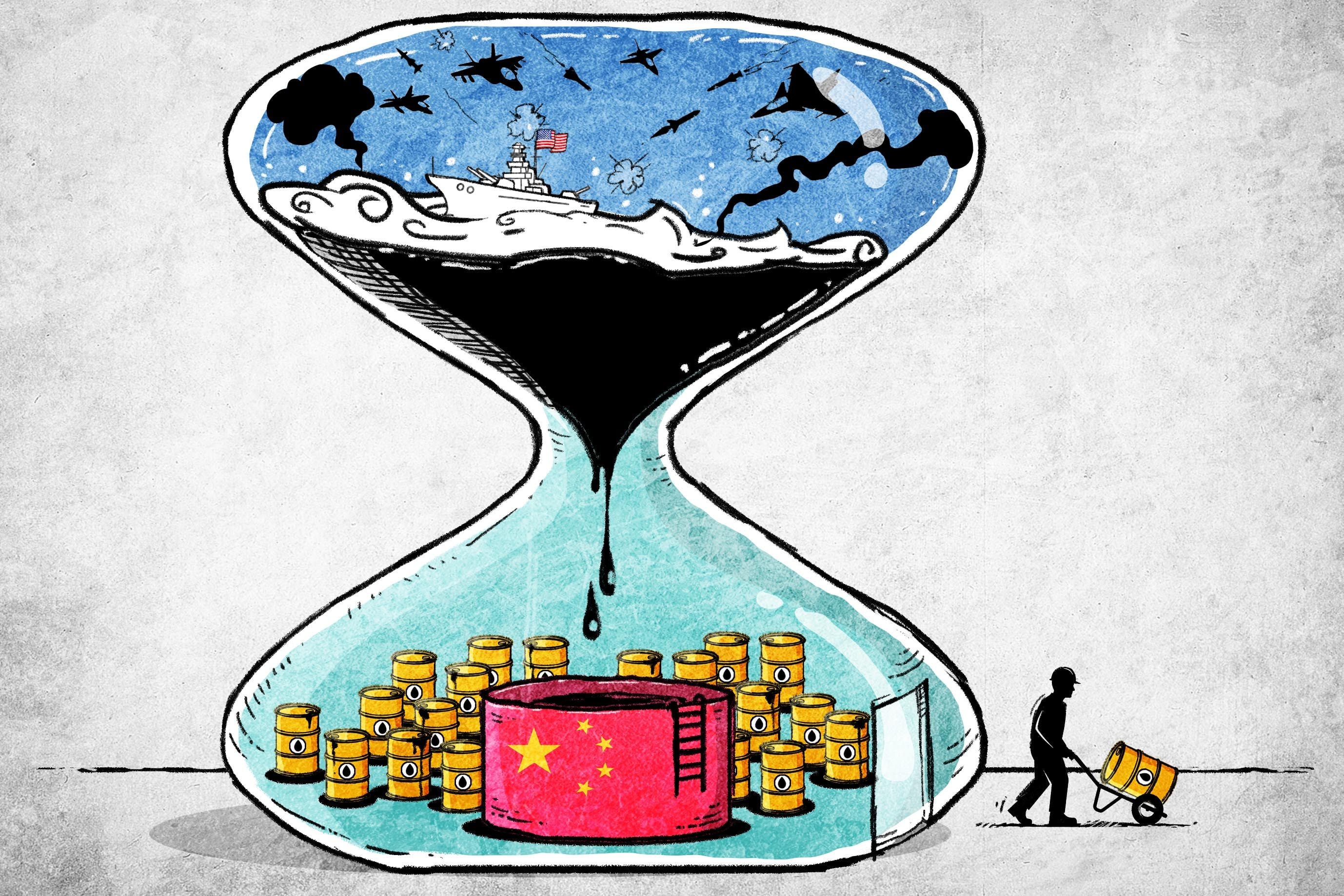
Illustration: Henry Wong Beijing’s long-standing geopolitical playbook – stay in your lane, avoid military entanglement, prepare exhaustively and issue bland “win-win” statements about the UN charter and calls to talk not fight – could see China emerge favourably from the Iran war, said economists, analysts and former US officials, as the conflict enters its fourth week with little end in sight and the US barrelling ahead. “People always say that China doesn’t understand the Mideast,” said Jeremy Chan, senior analyst with the Eurasia Group. “Maybe China understands it wants to stay as far away from this as possible.” The second-largest economy on Earth is hardly immune as Middle East shipping grinds to a halt, oil prices spike and instability reigns.
The Asian giant has its fingers on one out of every US$6 worth of goods traded globally.
And over two-thirds of China’s oil is imported, half through the blocked Strait of Hormuz, including a good chunk from Iran and feedstock essential for fertiliser.
While Beijing’s close ties with Iran may allow more Chinese cargo to transit the narrow strait, it is hardly invulnerable in a war zone that has already seen dozens of vessels hit.
And its bid to remain on the sidelines is being tested by US President Donald Trump’s insistence that China and others provide ships to help clear the strategic waterway.
But planning-obsessed Beijing has, over the years, put safeguards in place, crafted in large part to withstand any future conflict over Taiwan, that are reducing its vulnerability in this crisis. “Short of a major conflict that engulfs the region, I don’t think China is going to be seriously damaged,” said William Figueroa, a leading China-Iran scholar with the University of Groningen in the Netherlands.
These include oil pipelines to circumvent maritime chokepoints such as the Strait of Malacca; massive underground oil reserves in Zhejiang, Shandong, Guangdong and Fujian that are largely immune to satellite surveillance or bombing; energy diversification; and partially successful food self-sufficiency goals.
Even as the US has let its petroleum reserves decline since 2010, China’s are flush, helped by opportunistic purchases of discounted, sanctioned Russian and Iranian oil.
China can also tap more Russian petroleum through their joint pipeline.
China’s oil reserves are a state secret.
But commercial satellite images and public data indicate Beijing has amassed the world’s largest cushion against energy sh
原文链接: 南华早报