
Should China be worried about Japan’s maritime force overhaul?
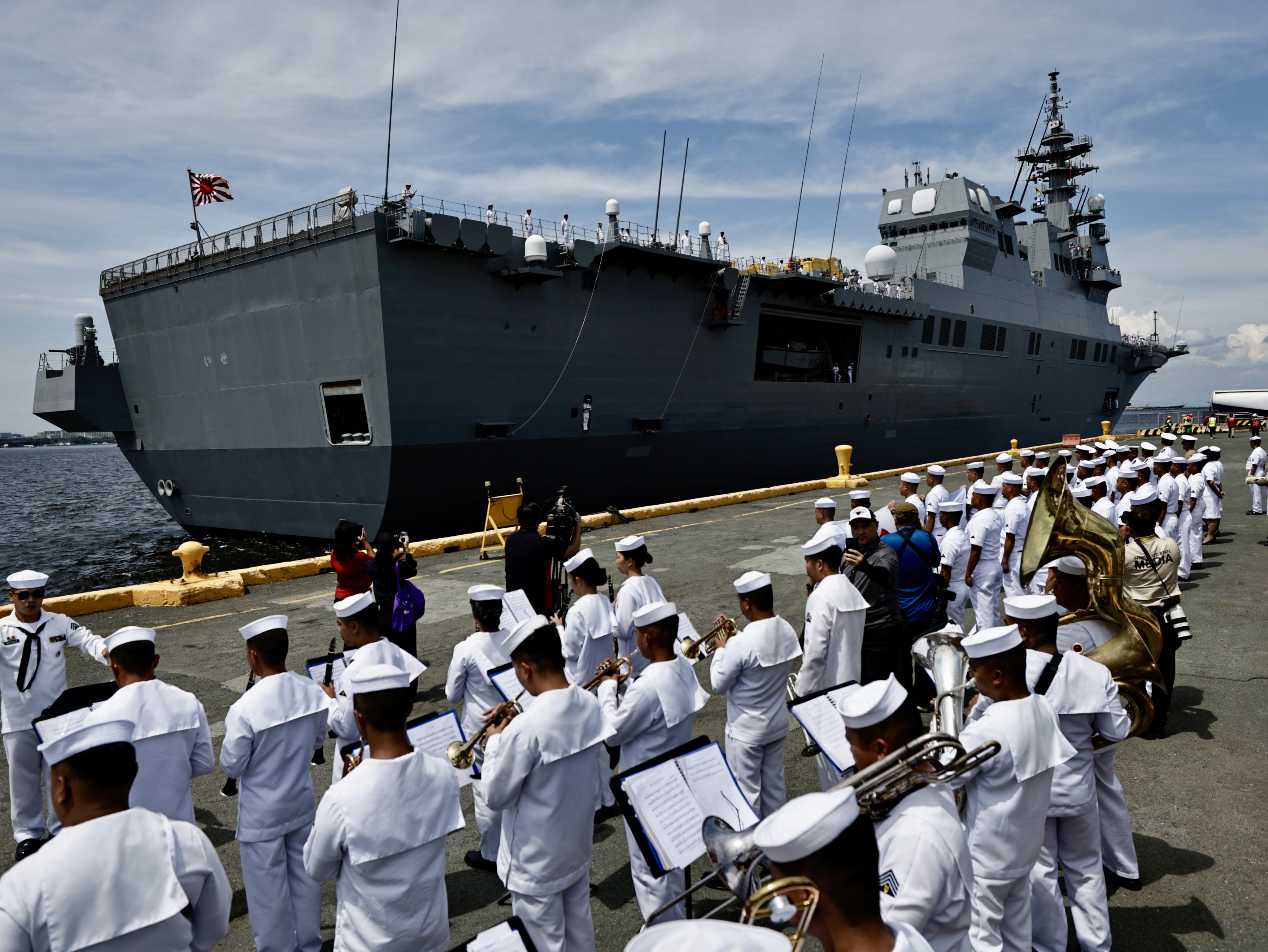
Japan Maritime Self-Defence Force ship JS Ise, a Hyuga-class helicopter destroyer, is the flagship of the newly established Amphibious and Mine Warfare Group under the Fleet Surface Force.
Photo: EPA-EFE Japan’s structural reform of its maritime force reflects a shift towards quasi-carrier operations and preparations for a potential conflict with Beijing, according to Chinese analysts.
The Japan Maritime Self-Defence Force (JMSDF) on Monday revamped its organisational structure to accelerate decision-making and improve ship operations, according to Kyodo News.
The agency described the move as part of Japan’s efforts to strengthen defence amid China’s growing assertiveness.
As part of the overhaul, the Fleet Escort Force, created in 1961 and long regarded as the backbone of Japan’s surface fleet, was formally abolished.
In its place, the JMSDF established a new Fleet Surface Force to centrally command and control surface vessels.
At the heart of the restructuring is the consolidation of four escort flotillas under the former Fleet Escort Force into three surface warfare groups under the new Fleet Surface Force.
Japan Maritime Self-Defence Force escort ship JS Kurama (left) follows the destroyer JS Yudachi bearing the JMSDF ensign during a fleet review in Sagami Bay, south of Tokyo, on October 14, 2012.
Photo: AFP Chinese military analyst Fu Qianshao described the reorganisation as more than a name change. “It is a structural response to the expanding operational roles of Japan’s quasi-carrier platforms,” Fu said.
In recent years, the JMSDF has been converting its two Izumo-class helicopter destroyers – the JS Izumo and JS Kaga – into de facto aircraft carriers, enabling them to operate F-35B Lightning II fighters, the short take-off and vertical landing variant of the Joint Strike Fighter.
Japan received its first three F-35Bs in August last year, and these stealth aircraft will eventually be deployed aboard the modified JS Izumo and JS Kaga.
Both ships were undergoing extensive refits to support F-35B operations, according to media reports.
The two flat-tops will be the first Japanese warships to conduct fixed-wing carrier operations since World War II. “Regardless of their official designations, their basic function has become that of carriers capable of deploying F-35s,” Fu said. “Under these circumstances, the previous escort fleet structure became outdated, necessitating a new organisational adjustment.” Under the reorganisation, the JS Izu
原文链接: 南华早报