
Sri Lanka’s refusal to host US warplanes before Iran war risks trade backlash
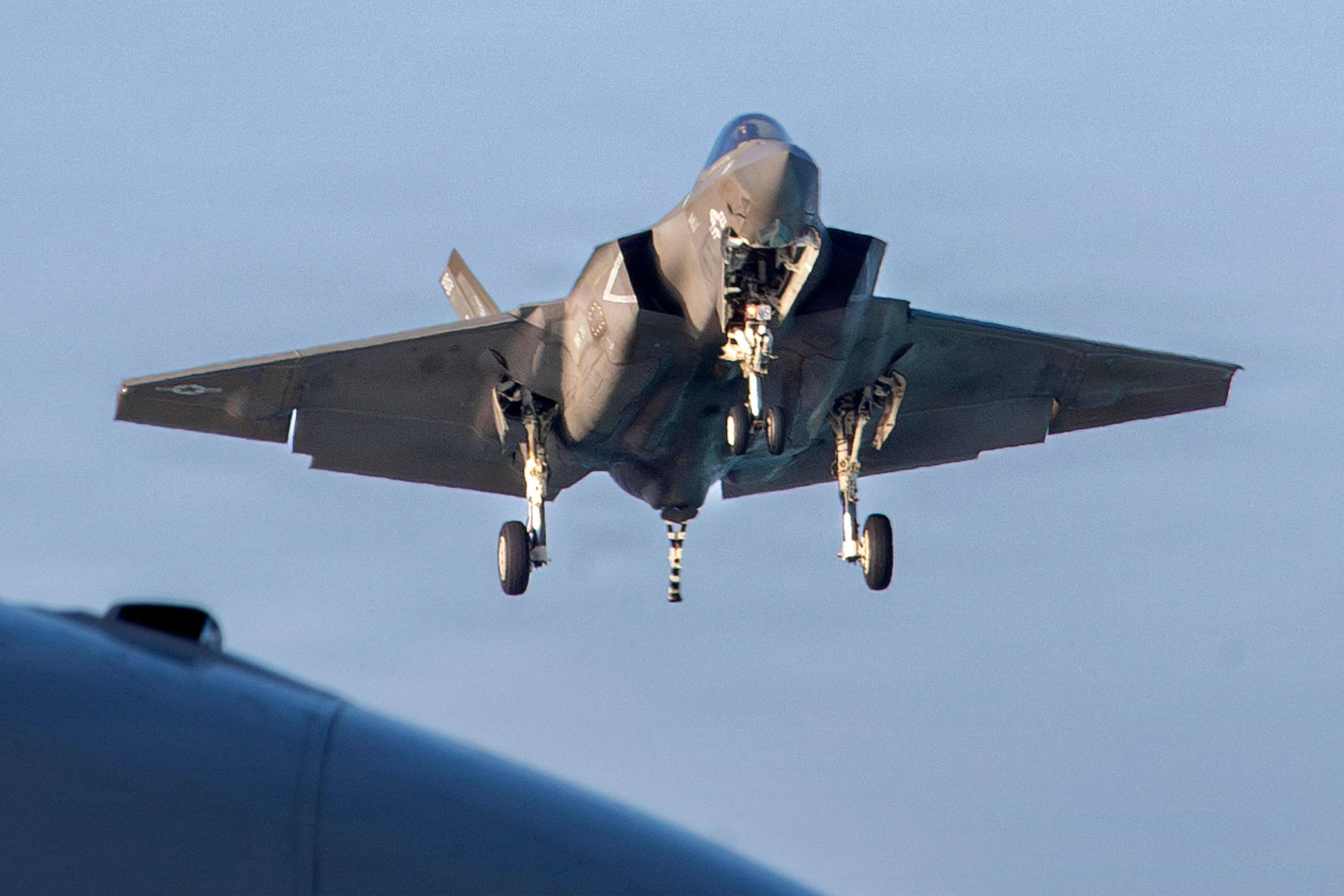
A US F-35C Lightning II prepares to land on the aircraft carrier USS Abraham Lincoln on March 3.
It is not clear which warplanes the US asked Sri Lanka to host.
Photo: US Navy/AFP Two days before the United States and Israel launched their war on Iran, Washington asked Sri Lanka to let two armed warplanes use an airport on its southern coast.
Colombo said no, Sri Lankan President Anura Kumara Dissanayake recently revealed – a decision analysts said reflected the Indian Ocean island’s desire to avoid being drawn into a foreign conflict from which it had “nothing to gain”.
The request, made on February 26, reportedly sought to relocate two aircraft from a US base in Djibouti to Mattala International Airport from March 4 to 8. “They wanted to bring two warplanes armed with eight anti-ship missiles,” Dissanayake said. “We said ‘no’.” A Sri Lankan naval vessel approaches the Iranian vessel IRIS Bushehr on March 5, a day after the Iranian military ship IRIS Dena was torpedoed off the island’s coast.
Photo: Sri Lanka Navy/Reuters Sri Lanka’s refusal did not keep the war at arm’s length for long.
On March 4, a US submarine torpedoed Iranian frigate IRIS Dena just off the island’s coast.
Colombo also turned away three Iranian naval vessels that requested a port call from March 9 to 13, upon returning from exercises in India. “Had we said ‘yes’ to Iran, we would have had to say ‘yes’ to the US as well,” Dissanayake said.
Still recovering from its worst financial crisis since independence, the island nation depends on the West for export markets, the Gulf for fuel and the wider Indian Ocean economy for the remittances that keep millions of families afloat.
Motorists wait in long queues to refuel their vehicles at a petrol station on the outskirts of Colombo, Sri Lanka, on March 15.
Photo: AFP It imports 38 per cent of its oil and 17 per cent of its gas from the United Arab Emirates, with a further 11 per cent of its oil from Saudi Arabia.
The South Asian nation also exports nearly US$1 billion worth of goods annually to the Gulf, a market that accounts for roughly 38 per cent of its remittances.
Then there is America.
The US is Sri Lanka’s single largest merchandise export market, receiving around 23 per cent of its total exports – close to US$3 billion in 2024 and 2025 – and more than 40 per cent of its garment shipments. “The Sri Lankan government does not want to be drawn into a conflict from which it has nothing to gain,” said defence analyst Frederi
原文链接: 南华早报