
China warns Japan that ‘new militarism’, ‘Takaichinomics’ risk instability
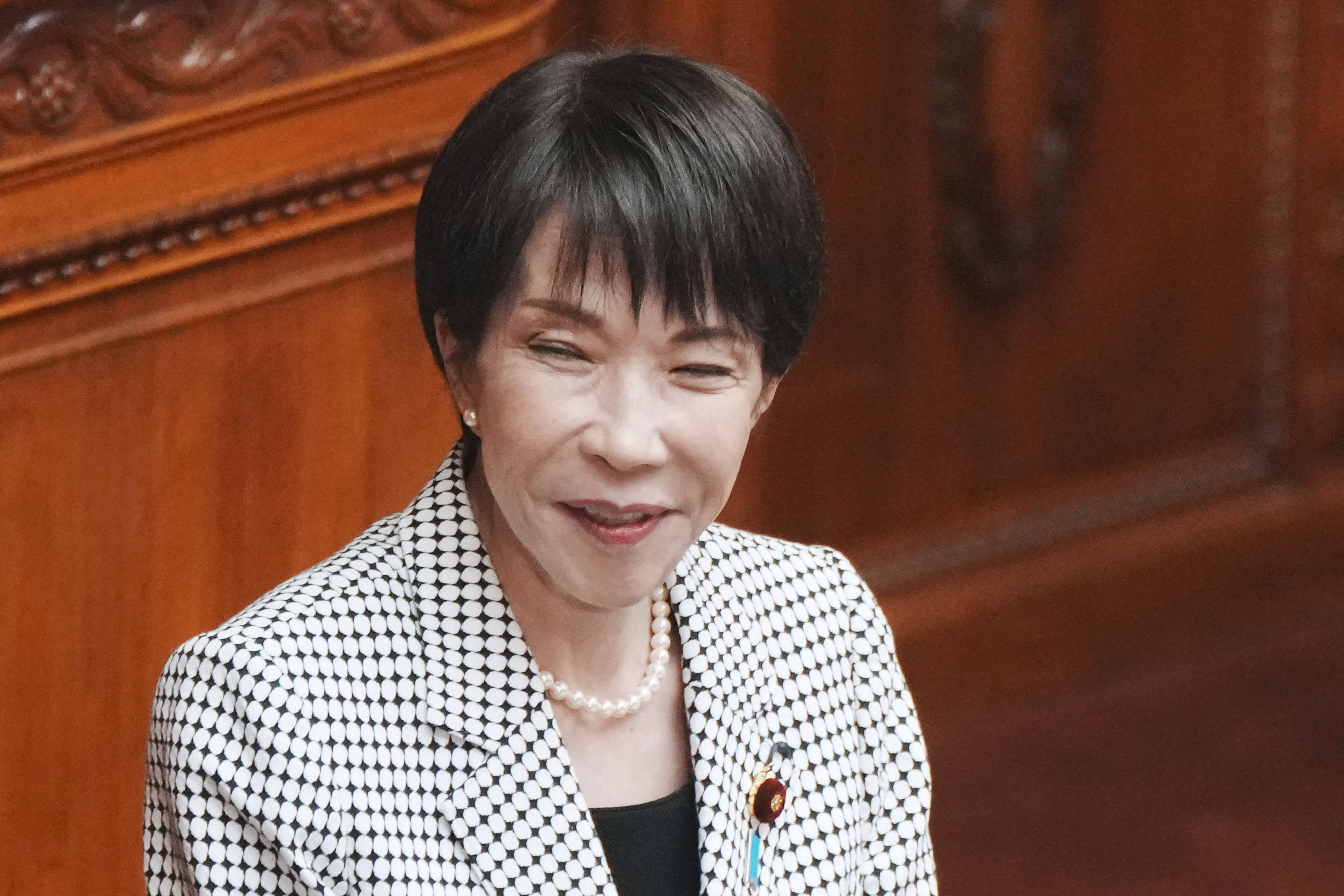
Japan’s Prime Minister Sanae Takaichi answers questions during a plenary session of the House of Councillors, the upper house of the National Diet of Japan, in Tokyo on Monday.
Photo: AFP People’s Daily, a mouthpiece of China’s ruling Communist Party, has warned Japan that higher military spending and what the newspaper called a looming “defence bubble” will not save an economy weakened by the falling yen and Iran war energy crisis, amid a protracted diplomatic row between Beijing and Tokyo.
In a Tuesday commentary published under the “Zhong Sheng” pen name – a pseudonym used to voice Beijing’s position on global affairs – the paper said the administration of Japanese Prime Minister Sanae Takaichi was pursuing a “political gamble” that was “doomed to fail in resolving deep-rooted structural problems”. “The Takaichi administration’s obsession with militaristic adventurism is by no means a cure for the Japanese economy, but a poison that will accelerate its decay,” it said.
The piece took aim at “Takaichinomics” – a neologism for the Japanese prime minister’s economic programme – often described as a mix of aggressive public spending and higher investment in defence and economic security It said Tokyo was attempting to mask governance failures with arms spending and aggressive fiscal expansion, a strategy that some critics warn could exacerbate the country’s massive public debt.
The Japanese economy – already strained by a weak yen and import-driven inflation – has suffered a fresh shock from the US-Israeli war with Iran, which has pushed up oil prices and revived the spectre of stagflation.
The commentary said Japan was “under the dual squeeze” of an “oil premium” and a struggling yen, warning that the impact was rapidly spreading from the energy sector to people’s daily lives.
It also accused the Takaichi administration of reducing much-needed structural reforms to “crisis management investment” in areas such as defence, saying Tokyo intended to avoid the political costs of genuine reform. “While this set of manoeuvres by Takaichi may generate a ‘defence bubble’ in the short term, it essentially ties Japan’s economy ever more tightly to the chariot of ‘new militarism’, with the ultimate cost borne by the Japanese people,” it said. “By retracing the disastrous path of militarism and delusionally attempting to forcibly drive growth by stoking confrontation, Japan will ultimately only be pushed completely into the abyss.” The article came amid continued
原文链接: 南华早报