
Trump’s energy war over Iran is failing just like his China trade war
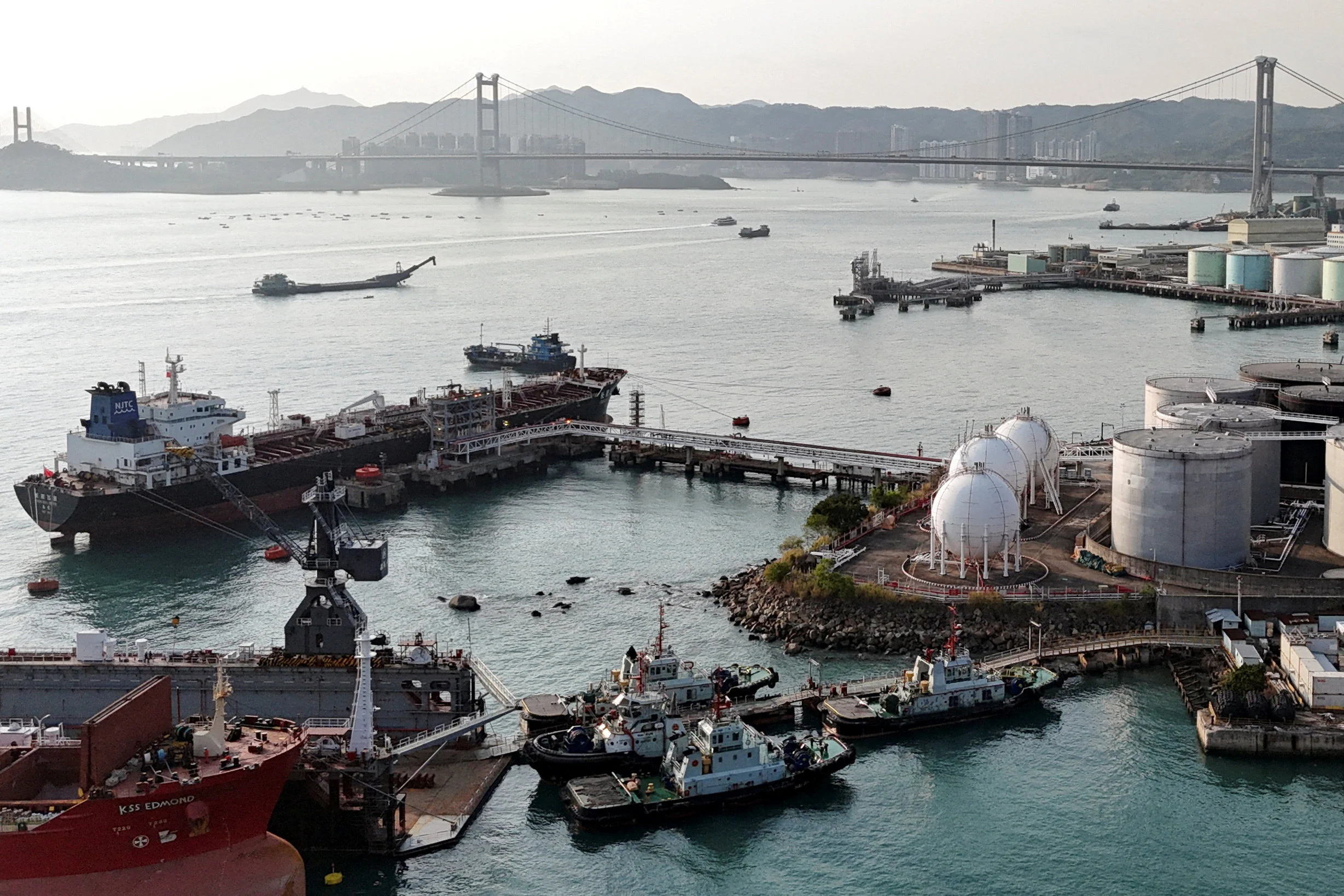
A Chinese-flagged tanker is seen moored at an oil terminal at Tsing Yi port in Hong Kong on March 19.
Photo: Reuters US President Donald Trump has initiated an international trade war in which American consumers and businesses are bearing most of the immediate costs, and now he has started a war on global energy where people worldwide are paying the price.
While Iran is no match for US military might, Tehran has turned its control of the Strait of Hormuz – through which 20 per cent of the world’s crude oil flows – to its advantage.
Nations in conflict with the United States do not need to fight back tariff for tariff or missile for missile; they can target its vulnerabilities.
Most countries capitulated to Trump’s trade war except China, which leveraged its dominance in rare earths.
Iran is fighting back by using its strategic geography.
While the dependence of US industries on China’s critical minerals worked to Beijing’s advantage, the US is more self-sufficient in energy.
As such, Iran’s response is effective only through having a global impact.
Since oil is a global commodity, US consumers will end up paying the kind of fuel prices seen in other countries such as Japan.
With crude oil prices above US$110 per barrel, Americans are paying nearly US$4 per gallon for petrol and more than US$5 for diesel.
Trump’s trade war has taught the world that he responds to signals from financial markets.
For Iran, what better way to wage war against Trump than driving up energy prices and global inflation?
Instead of Trump being able to change the Iranian regime and select its new leader, Iran is diminishing Trump’s domestic standing by reshaping the landscape of this year’s US midterm elections.
The rapid success of the US abduction of Venezuelan President Nicolas Maduro led to hubris that Trump could pull off a similar move of replacing Iran’s leadership with a more compliant figure.
He evidently thought subduing two of China’s top energy partners would strengthen his hand against Beijing.
Instead, he replaced the late Ayatollah Ali Khamenei with his more hardline son Mojtaba Khamenei.
The dynamics around Iran have been complex in ways the Trump administration did not expect, leading to the US asking to delay Trump’s visit to Beijing.
There was also the sight of Trump asking China – as well as Japan and Nato allies – to help reopen the Strait of Hormuz.
While much of East Asia’s energy comes through the strait, the blockage has the potential to hu
原文链接: 南华早报